
Bridging Policy and Implementation: Rumah Energi Strengthens the Role of Green Cooperatives to Support Solar PV Development
Rumah Energi continues to advance the role of cooperatives as key actors in community-based energy transition. Since 2021, its Green Cooperative program has reached more than 150 cooperatives, strengthening their capacity to develop renewable energy business models. This effort aligns with Indonesia’s national target to develop up to 100 GW of Solar PV under the National Strategic Project (PSN), which emphasizes inclusive and sustainable community participation.
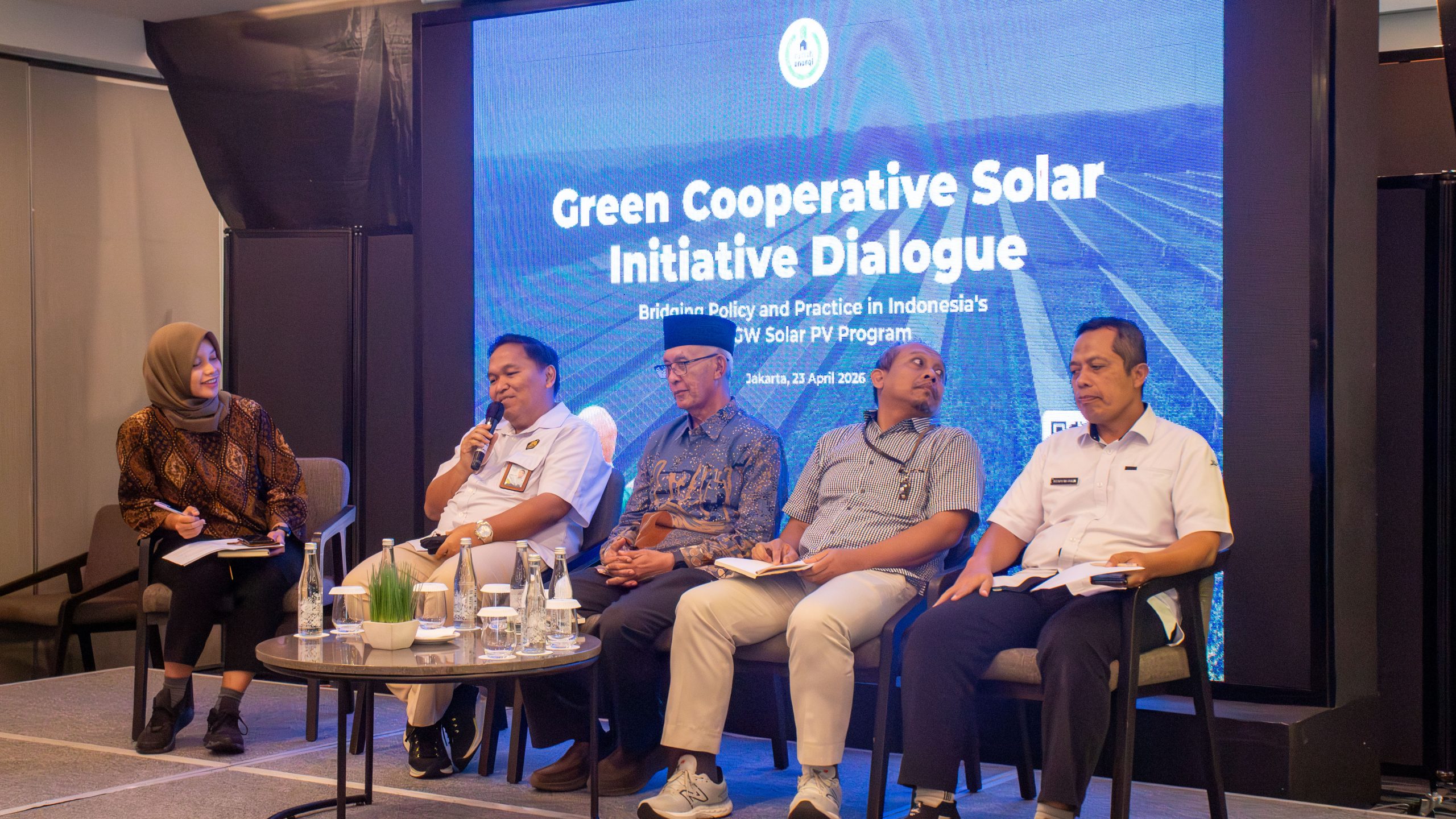
However, challenges on the ground show that energy transition is not only about policy ambition, but also about implementation readiness. To bridge this gap, Rumah Energi organized the “Green Cooperative Solar Initiative Dialogue: Bridging Policy and Practice in Indonesia’s 100 GW Solar PV Program” in Jakarta. The forum brought together key stakeholders—from government ministries to development partners—to align national policy directions with real needs at the community level.
Executive Director of Rumah Energi, Sumanda Tondang, highlighted the importance of closing the gap between national policy and grassroots implementation. “We designed this forum as a space to identify real implementation bottlenecks while formulating more operational collaboration strategies. Cooperatives hold great potential as drivers of energy transition at the community level, but their role needs to be strengthened through appropriate policies, feasible business models, and adequate financing support,” he stated.
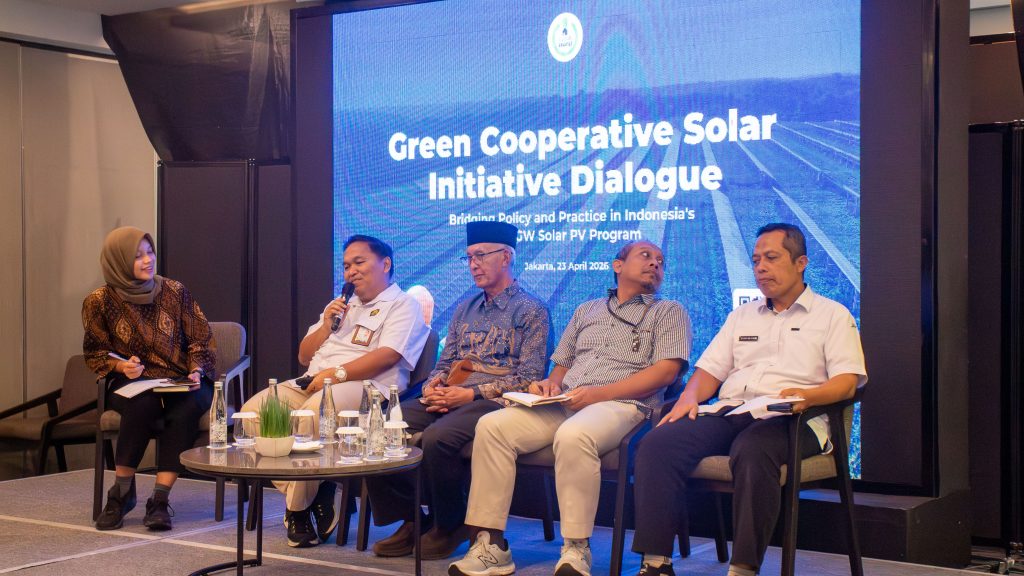
“Kementerian Koperasi is promoting Solar PV development to reduce energy access inequality while strengthening the role of communities as productive economic actors. Moving forward, we are also targeting the development of 102 Solar PV installations within the next two years, focusing on areas that remain underserved by electricity,” said Roysepta Abimanyu, Expert Staff to the Deputy for Cooperative Business Development at the Ministry of Cooperatives of the Republic of Indonesia.
Through a collaborative approach, the Green Cooperative program integrates Environmental, Social, and Governance (ESG) principles while developing practical, community-based renewable energy models. Field assessments under the TERBIT initiative reveal persistent gaps in technical capacity, financing access, business models, and cross-sector coordination. The forum therefore also addressed governance strengthening and the development of innovative financing schemes such as blended finance to ensure that cooperative-based Solar PV models are both bankable and scalable.
Looking ahead, Rumah Energi encourages this multi-stakeholder dialogue to move beyond discussion toward concrete actions, including the development of pilot Solar PV projects led by cooperatives that can be replicated across regions. By prioritizing real community needs and fostering cross-sector collaboration, this initiative is expected not only to accelerate the 100 GW Solar PV target, but also to ensure that Indonesia’s energy transition is just, inclusive, and sustainable.
Written by: Tim TERBIT
Edited by: Fauzan Ramadhan