
RISE Series Workshop Affirms Cooperatives' Readiness to Support Indonesia's 100 GW Solar Target
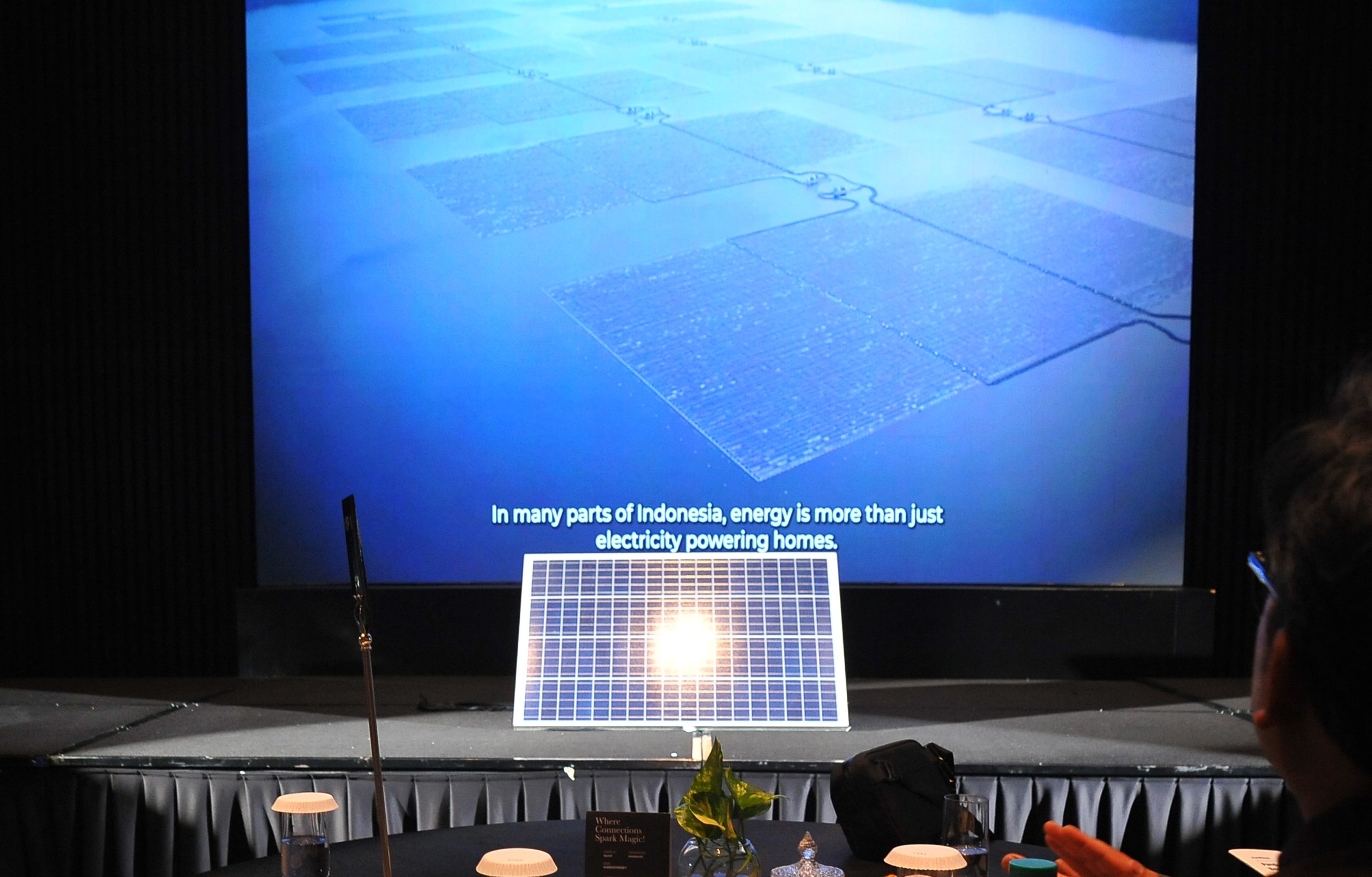
Jakarta, 23 June 2026 — Solar power (PLTS) cooperatives have demonstrated strong potential to play a pivotal role in achieving Indonesia’s ambitious 100 GW solar target, provided they are supported by productive business models, innovative financing mechanisms, and enabling government policies.
This was the key conclusion of the RISE Series (Readiness of Indonesia Solar Energy Series) Green Cooperative Workshop Series – Workshop 3: Viability Assessment and Investment Readiness, organized by Rumah Energi in Jakarta. The event brought together representatives from the Government of Indonesia, financial institutions, private sector developers, think tanks, and civil society organizations to evaluate the bankability and investment readiness of cooperative-based solar energy models.
The workshop marked the culmination of a months-long process involving field studies, business model development, and stakeholder consultations aimed at supporting the implementation of Indonesia’s national 100 GW solar initiative.
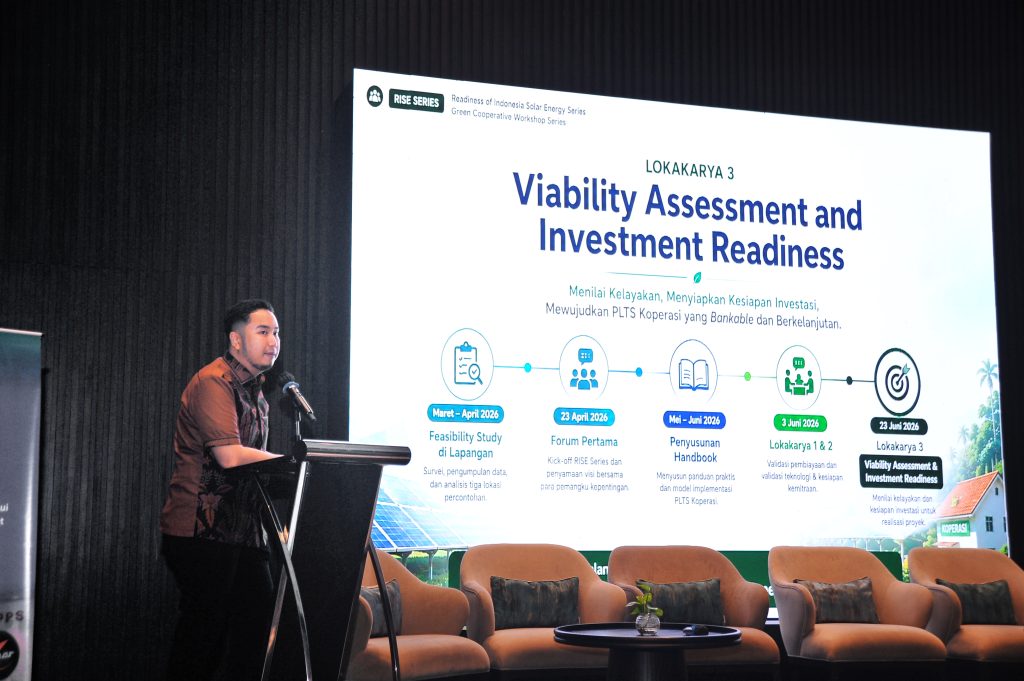
During the opening presentation, Rumah Energi Expert M. Sammy Ivan Kurniawan explained that the primary challenge facing cooperative-based solar projects is not the technology itself, but ensuring that projects generate sufficient economic value to attract investment.
Field studies conducted across three pilot locations found that standalone solar projects would require approximately 21–22 years to recover their investment, making them less attractive to financiers. However, when integrated with productive economic activities—such as cold storage for fisheries, dairy processing, and aquaculture—the payback period could be reduced to between four and eight years, depending on local conditions.
The pilot projects in Blanakan (coastal), Pasuruan (highland), and Gili Genting (island) demonstrated that site-specific business models significantly improve financial viability while delivering meaningful social benefits. Beyond reducing energy costs, the integrated models are projected to generate additional annual revenues of up to IDR 1–2 billion and achieve an indicative Social Return on Investment (SROI) of 2.7–3.3 for every rupiah invested.
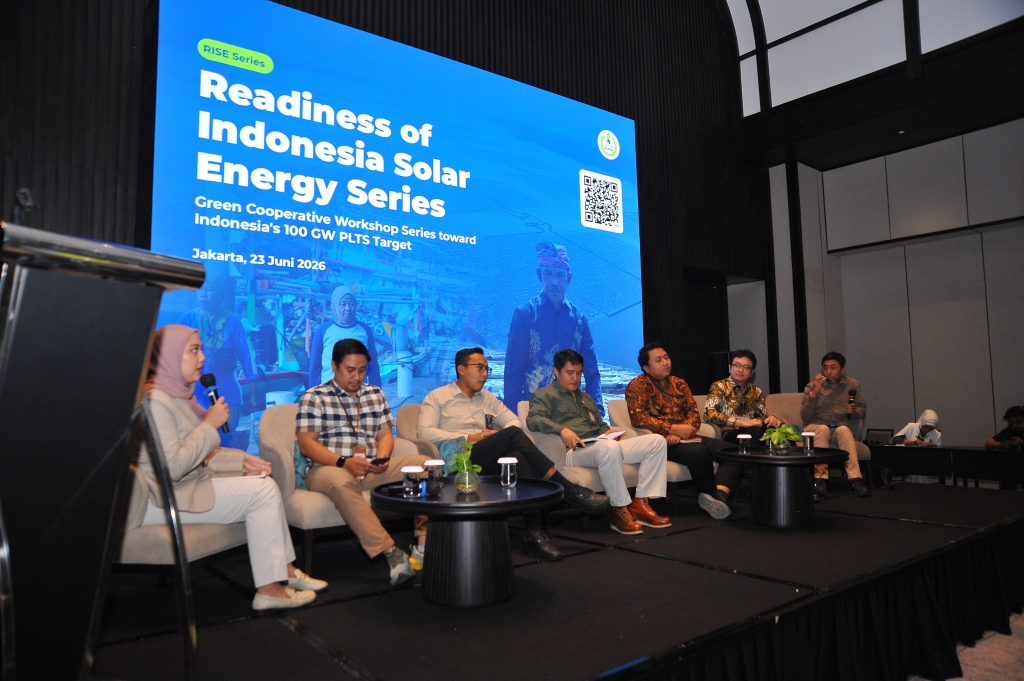
The consultative panel, featuring representatives from the Ministry of Energy and Mineral Resources (MEMR), the Ministry of Cooperatives, LPDB Koperasi, the Institute for Essential Services Reform (IESR), and Sesna Group, agreed that Indonesia’s regulatory framework already provides cooperatives with opportunities to participate in the electricity sector. The next priority is ensuring that projects are commercially bankable, supported by robust business models, and backed by more adaptive regulations.
Lukman Nur Iman Syah, Representative of the Directorate of Electricity Program Development at MEMR, emphasized that solar energy has become a strategic priority within Indonesia’s long-term energy planning.
“Solar power already has a clear place in Indonesia’s energy transition. The opportunity is there; what remains is ensuring the right supply and implementation mechanisms are in place.”
Meanwhile, Deon Arenaldo, Director of Energy System Transformation at IESR, highlighted that cooperative-based solar initiatives should be viewed as more than electricity projects.
“Cooperative-based solar power is part of Indonesia’s broader energy transition agenda. It is not merely about generating electricity, but also about expanding energy access while fostering local economic and social development.”
The discussions also produced several policy recommendations, including simplifying licensing procedures for cooperatives, allocating dedicated solar capacity within Indonesia’s Electricity Supply Business Plan (RUPTL), integrating cooperatives into the national diesel replacement program, and strengthening blended financing schemes involving grants, revolving funds, commercial loans, and impact investment.
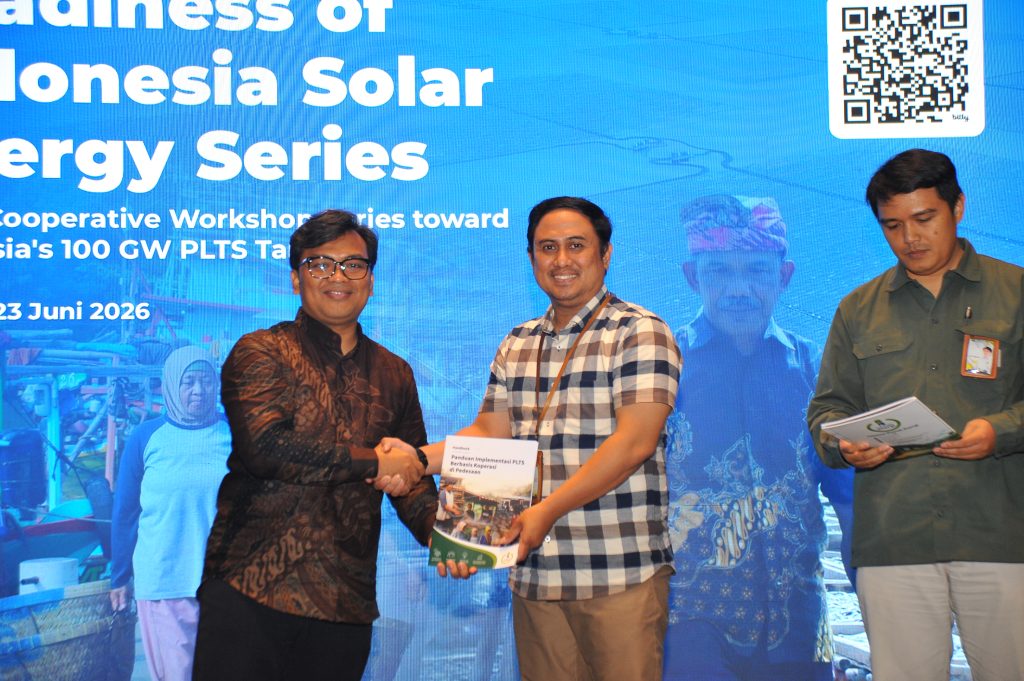
The workshop also featured the launch of the Implementation Handbook for Cooperative-Based Solar Power in Rural Indonesia, the official inauguration of the Green Cooperative Movement, and the signing of a Memorandum of Understanding (MoU) between Rumah Energi and the Ministry of Cooperatives to jointly develop renewable energy-based cooperative business models over the next three years.
Closing the event, Sumanda Tondang, Executive Director of Rumah Energi, emphasized that the RISE Series is ultimately about ensuring that Indonesia’s energy transition delivers tangible benefits to local communities.
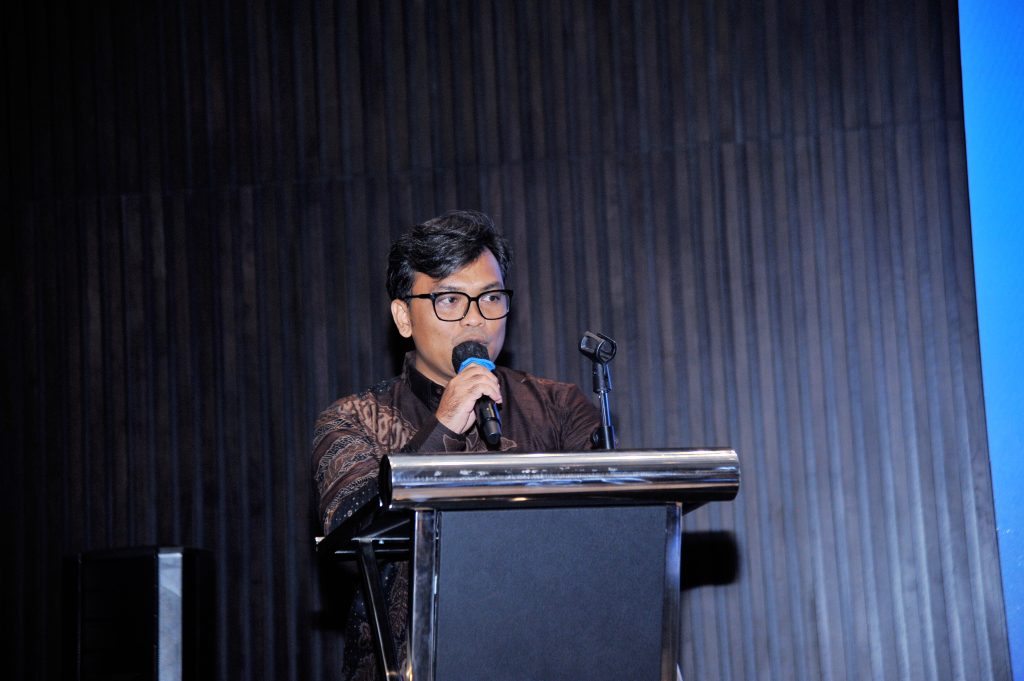
“Today, I am proud to announce that Yayasan Rumah Energi continues to promote the Green Cooperative approach so it can be replicated by cooperatives across Indonesia and become a catalyst for change within communities.”
He added that the outcomes of the workshop will be consolidated into a policy brief to be submitted to the Ministry of Cooperatives, providing concrete recommendations to strengthen the implementation of Indonesia’s 100 GW Solar Program through cooperative-led renewable energy initiatives. By fostering collaboration across government, financial institutions, the private sector, and local communities, Rumah Energi aims to position cooperatives not only as users of clean energy but also as drivers of sustainable rural economic development.