
Bu Siti's Story: Small Steps, Meaningful Impact
For Siti Sucilawati, waste management is not an abstract issue—it is part of her everyday life. She has experienced firsthand the consequences of poor environmental management. Her home was once flooded by water reaching waist height, carrying mud and piles of waste into people’s houses. Among the debris, disposable diapers were one of the most common types of waste clogging the drainage system.
The experience left a lasting impression. As both the neighborhood head (RT) and the chair of the Umi Kulsum Integrated Health Post (Posyandu), Bu Siti realized that the waste problem in her community was not only about cleanliness but also about long-standing habits. Many residents were accustomed to littering because they saw it as normal and did not immediately recognize its consequences.
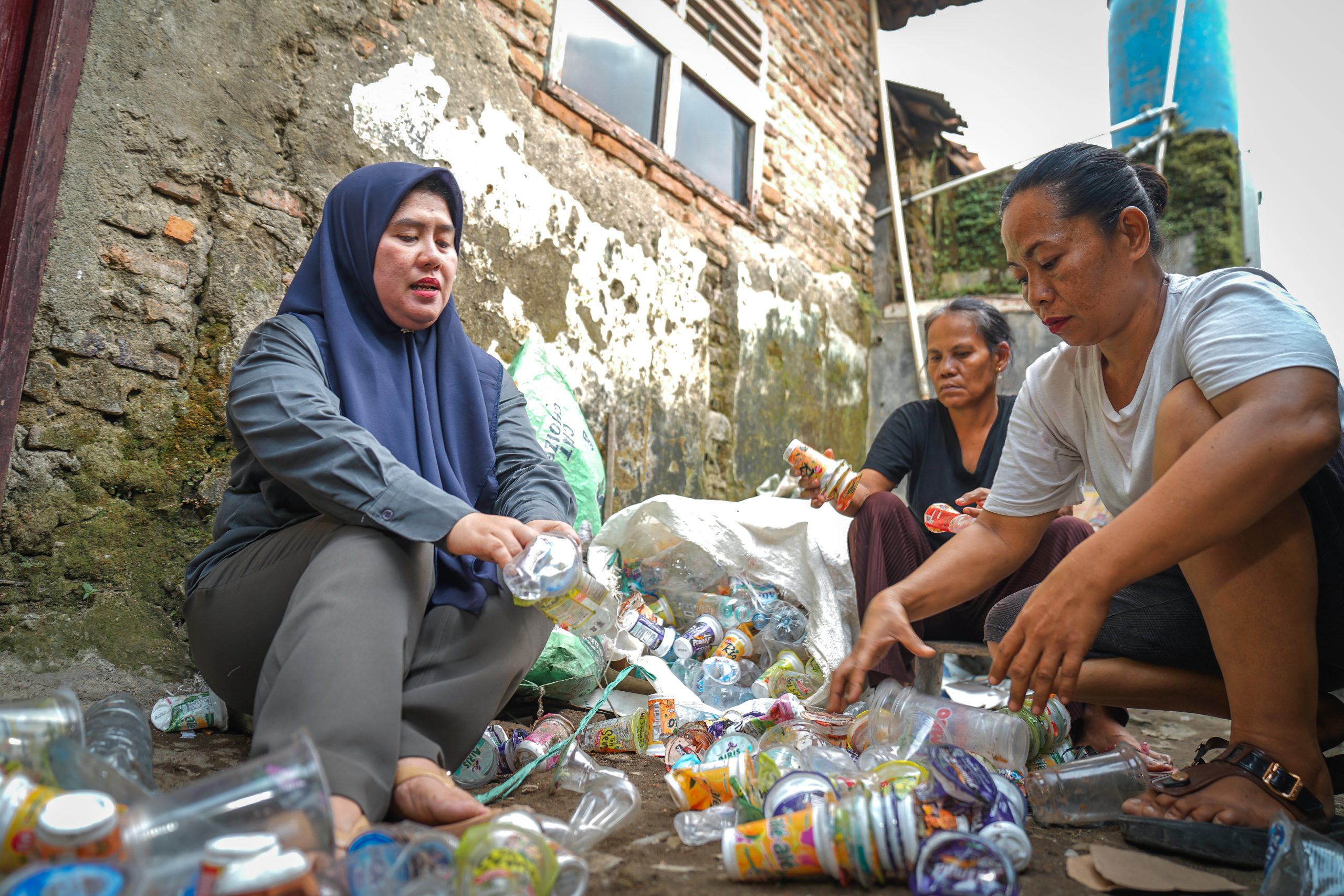
For Bu Siti, however, this situation could not continue. She began encouraging her neighbors to care more about their environment—not through large or complicated initiatives, but by starting with simple actions: disposing of waste properly, separating household waste, and collecting recyclable materials that still held economic value.
At first, her message was met with little action.
“At first, people would agree with me, but they didn’t actually put it into practice,” she recalled.
For many residents, sorting and collecting waste felt inconvenient. Some believed that such efforts would not make any real difference. But Bu Siti refused to give up.
She continued to encourage, remind, and lead by example. She even spent her own money to buy sacks, which she distributed to households so residents would have containers to collect recyclable waste. To her, every meaningful change begins with a small step, even if progress comes slowly.
Gradually, people began to realize that the waste they had always thrown away could actually generate income. Together with several other women, Bu Siti started regularly collecting and sorting recyclable waste before selling it. From this simple activity, the women who consistently participate now earn an additional income of around IDR 30,000 each month. The amount may seem modest, but for many homemakers, it makes a difference. It provides extra money for everyday necessities, while transforming something once considered worthless into something valuable.
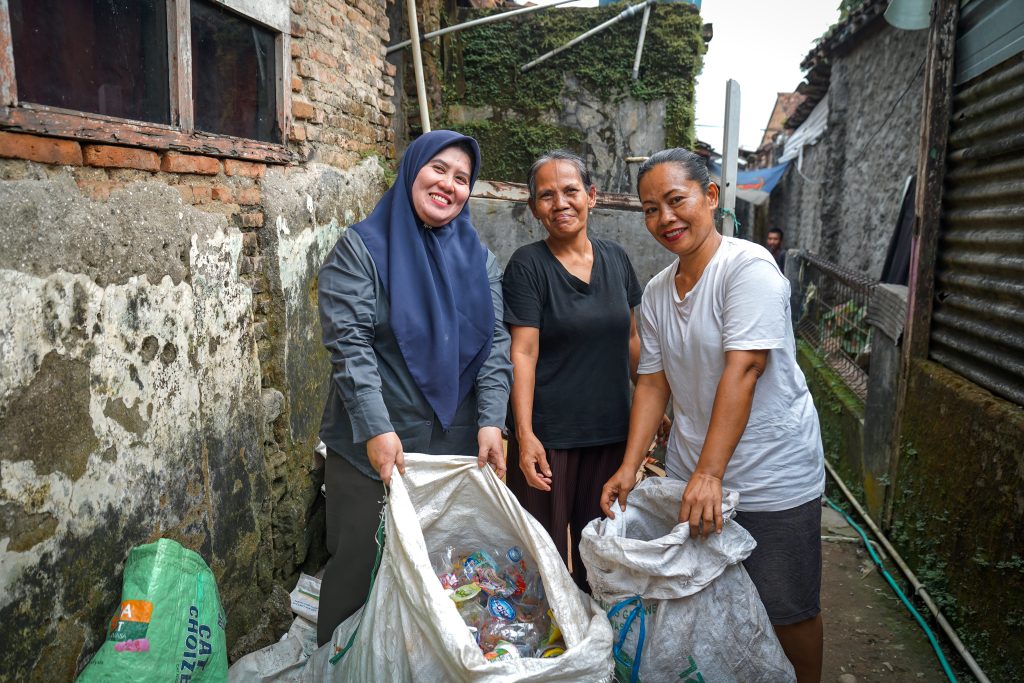
For Bu Siti, however, the most meaningful change is not the extra income. What matters most is the new habit taking root within the community. Residents who once littered are now learning to sort and collect their waste. Women who previously paid little attention to environmental issues have become actively involved. Waste management has even evolved into a new social space where women can gather, support one another, and strengthen their sense of community.
“Now the mothers actually enjoy getting together to sort waste,” she said.
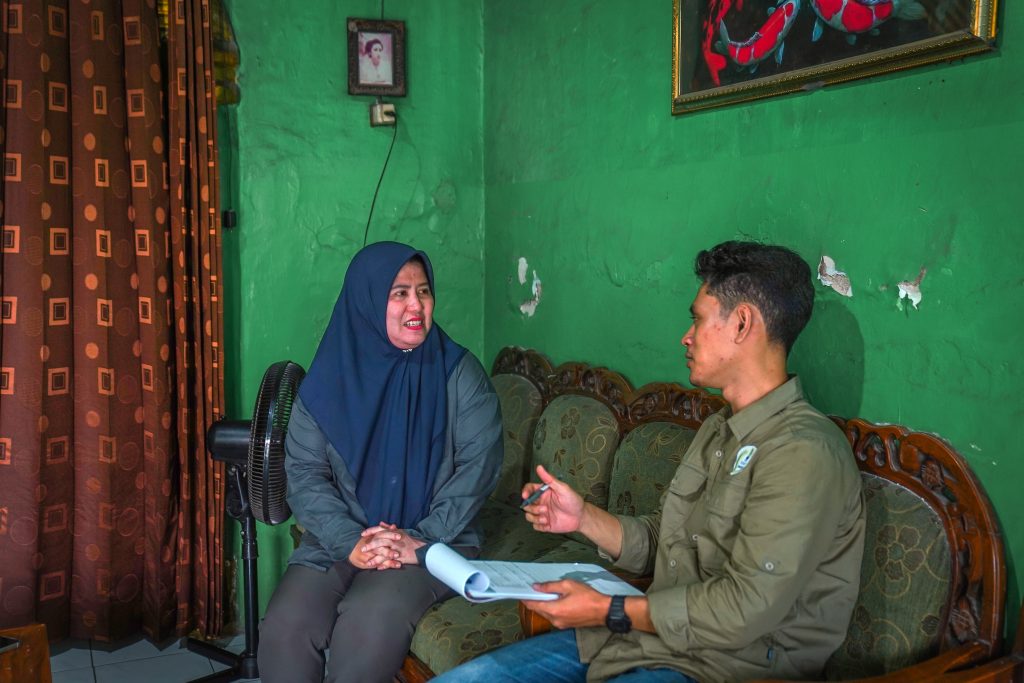
Participating in the waste management training through the PRO-WOMEN program further strengthened Bu Siti’s commitment. The knowledge she gained directly addressed the challenges she had long faced in her community. She did not want to keep those lessons to herself. Whenever Posyandu activities take place, Bu Siti now takes the opportunity to talk about environmental stewardship, the importance of waste segregation, and the significant role women can play in protecting their surroundings. These efforts have not yet solved the village’s waste problem entirely. But they have set meaningful change in motion—one small habit at a time.