

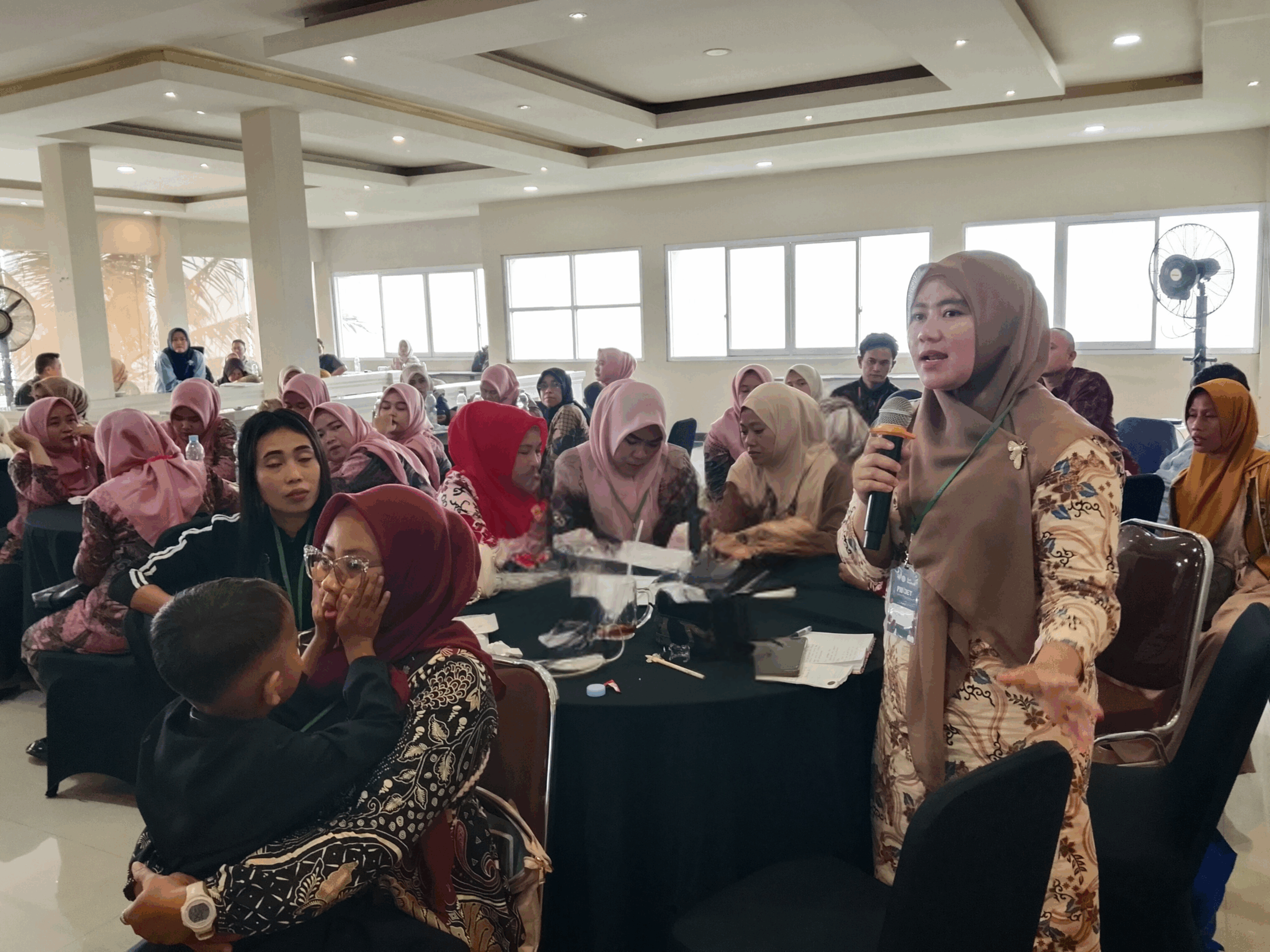
The energy transition is not only about developing clean energy infrastructure, but also about ensuring that communities living around energy projects have equitable access, opportunities to participate, and the ability to benefit from development. This was the key message of the Kick-off of the ProWomen for Just Energy Transition Program and the GEDSI Mainstreaming Workshop in the Energy Transition, organized by Rumah Energi in Maniis Subdistrict, Purwakarta Regency.
The event brought together government representatives, the energy sector, civil society organizations, and communities from four villages to discuss the importance of ensuring that women and vulnerable groups become active participants in the energy transition process.
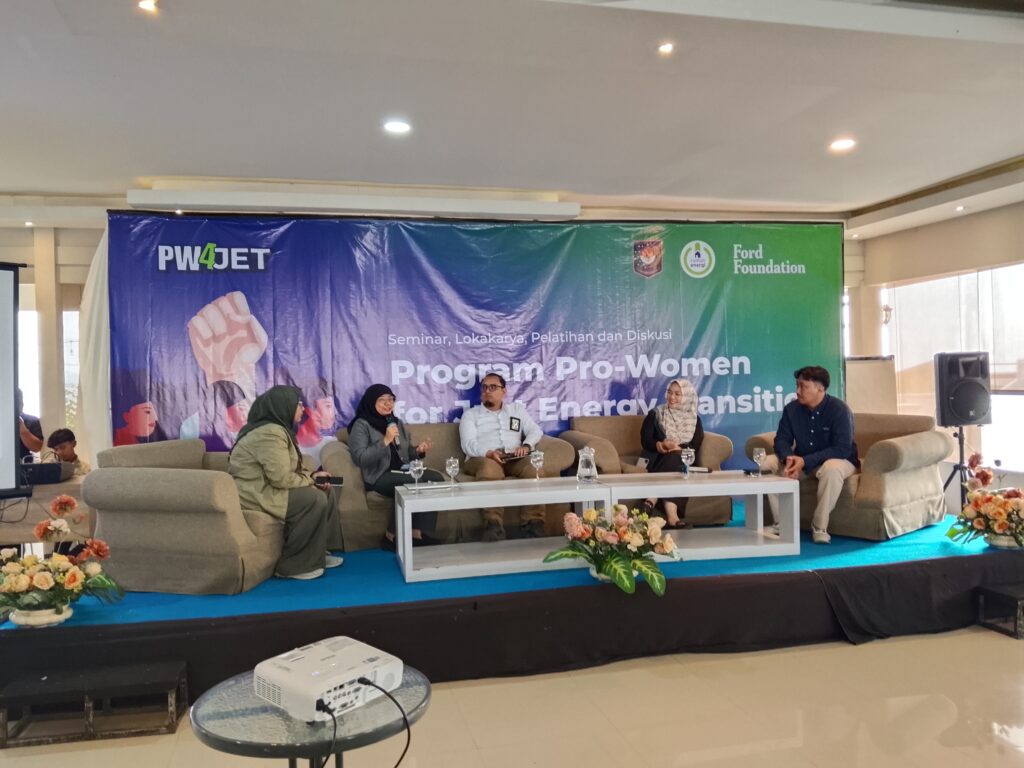
A Gender Assessment conducted by SAPA Institute in four villages surrounding the Cirata Solar Power Plant (PLTS Cirata) found that women continue to face various vulnerabilities related to education, economic opportunities, health, protection, and access to infrastructure.
Economically, for example, women face a double burden of domestic responsibilities and income-generating activities. Reduced access to agricultural activities can also weaken household food security, while women often have fewer employment opportunities than men. These economic conditions can ultimately affect family decisions regarding girls’ education.
These findings indicate that such vulnerabilities do not necessarily arise solely as a result of energy projects, as some existed beforehand. However, energy development must ensure that changes in spatial, economic, and social conditions do not further deepen existing inequalities.
Therefore, GEDSI should not simply be understood in terms of the number of women attending activities. More importantly, it must ensure that access, participation, control, and benefits of development are distributed equitably.
The energy transition in Purwakarta also presents opportunities to strengthen the local economy. The West Java Provincial Energy and Mineral Resources Agency (ESDM) emphasized the importance of developing renewable energy to expand energy access, diversify energy sources, and support productive economic activities in rural areas.
Such practices are already emerging around Cirata. PLN Nusantara Power UP Cirata, for instance, has utilized water hyacinth for handicrafts and animal feed, developed maggot cultivation to process organic waste, and used the resulting residue for oyster mushroom cultivation. These initiatives have also created income-generating opportunities for women, persons with disabilities, older people, and other vulnerable groups. In this way, the energy transition can serve as an entry point for building a more inclusive local economy, provided that communities are meaningfully involved from the planning stage.
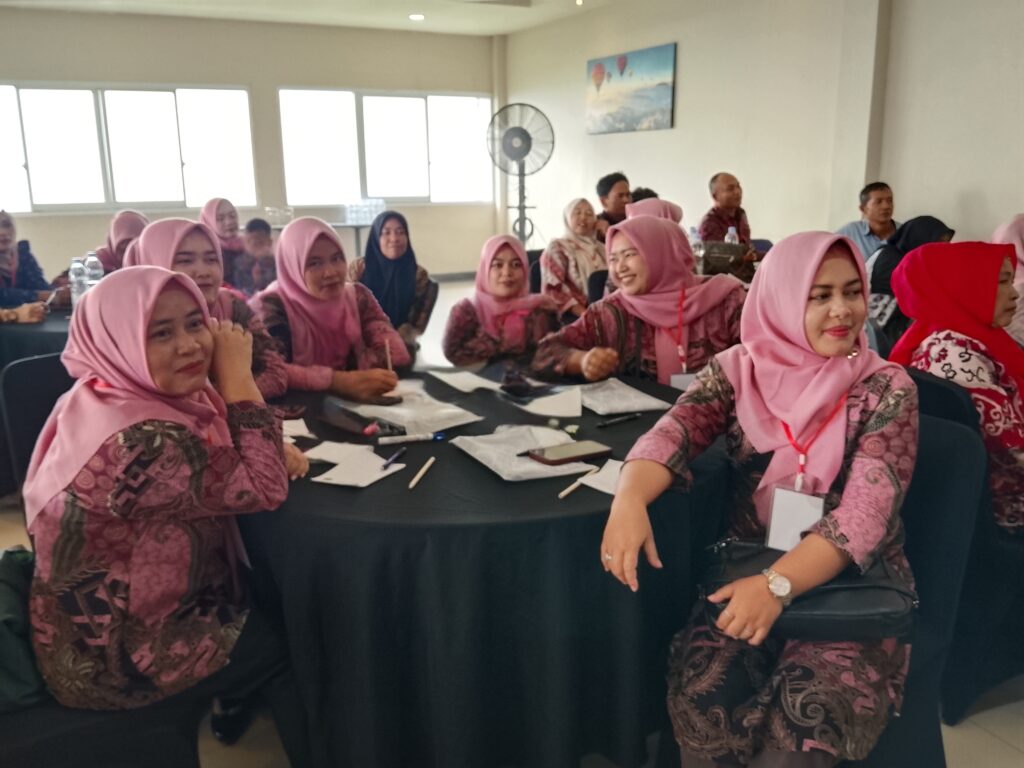
One of the key challenges discussed was the limited involvement of women in forums and decision-making processes related to energy development. Addressing this requires policies and mechanisms that ensure women’s voices are genuinely incorporated into development processes.
SAPA Institute recommended developing a gender protection framework, a gender action plan, and an integrated grievance mechanism involving companies, government, and communities. Participation spaces should also be expanded through forums that are closer to women’s everyday lives, such as PKK, Posyandu, religious study groups, and village forums. At the same time, engaging men and families is essential to creating an environment that supports women’s participation.
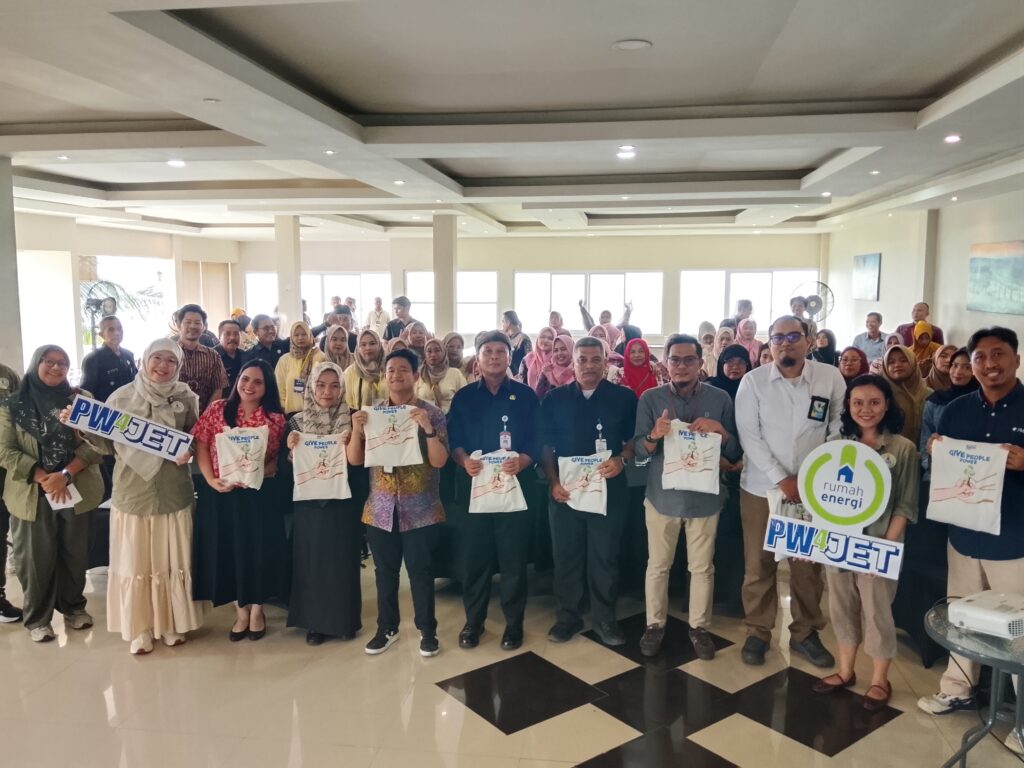
Through the ProWomen 4 Just Energy Transition Program, Rumah Energi will work with communities in Maniis Subdistrict until March 2027 by strengthening leadership, clean energy literacy, financial literacy, and other capacity-building initiatives. The program is not only designed to strengthen individual capacities, but also to encourage women to become community leaders and share their knowledge with others.
Ultimately, a just energy transition is not only about cleaner energy, but also fairer development. When women and vulnerable groups have the space to speak, participate, lead, and benefit, the energy transition can become part of a transformation that genuinely improves community well-being.