
Advancing an Inclusive Energy Transition through GEDSI Mainstreaming in Purwakarta
The energy transition is not only about changing technologies and energy sources. It is also about ensuring that the benefits and opportunities arising from this transition are experienced fairly by all groups in society. With this spirit in mind, Rumah Energi, through the ProWomen for Just Energy Transition (PW4JET) Program, conducted a Gender Equality, Disability, and Social Inclusion (GEDSI) mainstreaming activity in Maniis District, Purwakarta Regency, on 26–27 August 2026.
The activity brought together community members from Pasir Jambu, Sinargalih, Tegal Datar, and Citamiang villages, along with village governments and various stakeholders. The workshop provided a space to build a shared understanding of gender justice, the conditions of vulnerable groups, and the challenges communities face in responding to climate change and the energy transition.
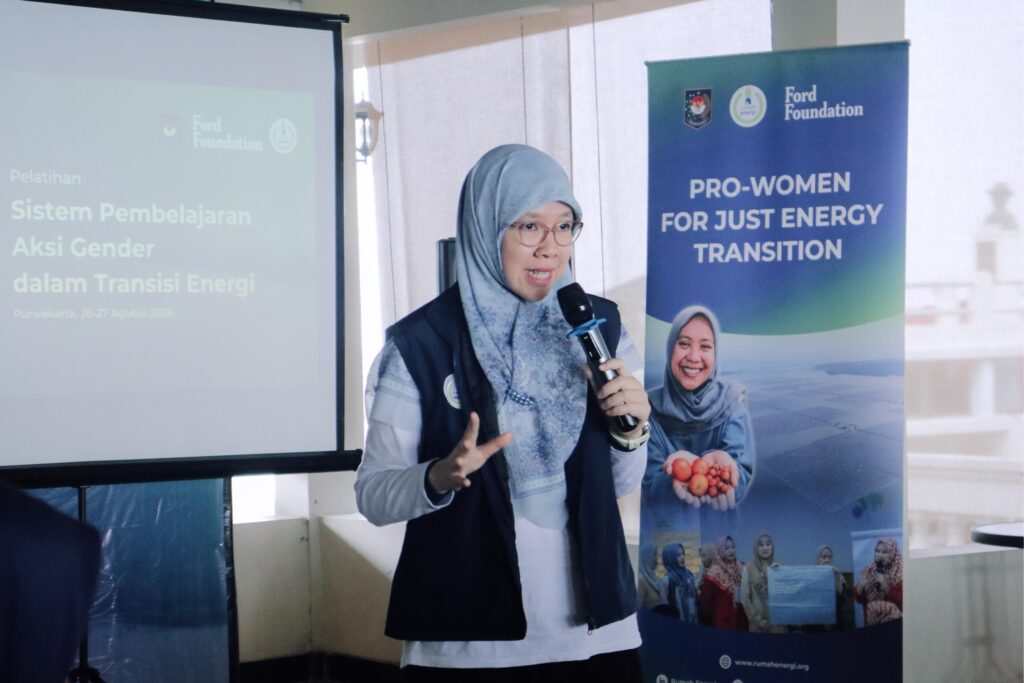
On the first day, the activity opened with an introduction to the Gender Action Learning System (GALS) approach. PW4JET Project Manager Gustina emphasized that the approach is not intended to change the roles of women and men within households, but rather to create space for reflection so that the division of roles can become fairer, more equal, and based on mutual agreement.
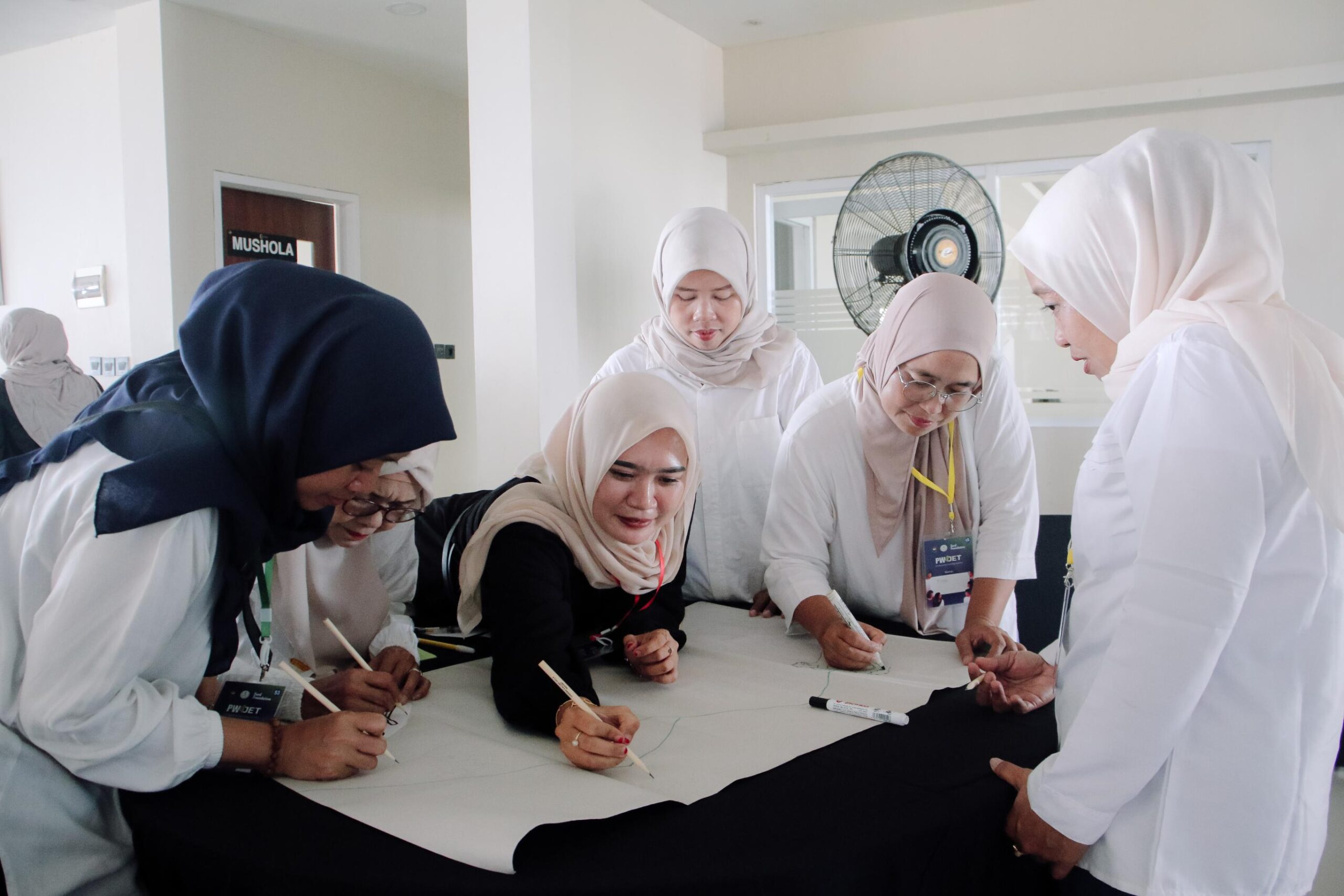
Through the Vision Journey: From the Pier to the Island of Hope session, participants were invited to map their families’ life journeys using the metaphor of a boat. Participants identified who served as the “captain,” who were the “passengers,” the goals they hoped to achieve over the next two to three years, and the various obstacles they might encounter along the way.
Most groups still portrayed men as the primary breadwinners or “captains” of the family, while women were positioned as supporters. However, the discussions also revealed changing patterns of roles. Some participants described women as increasingly working and earning income, while men were becoming more involved in childcare and domestic responsibilities.
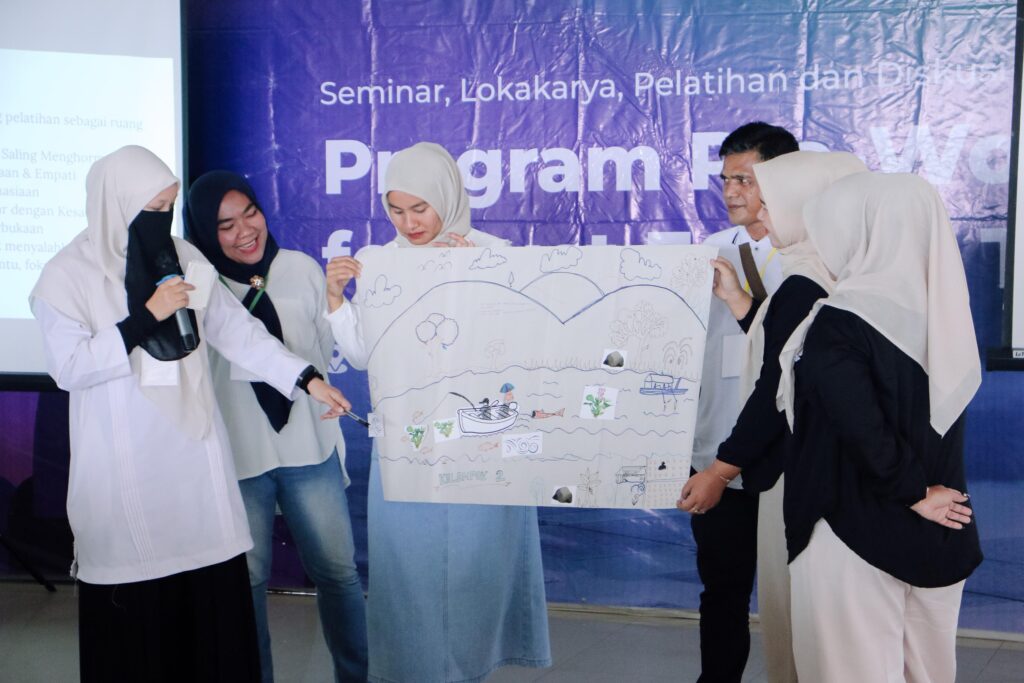
The family aspirations that emerged from the discussions were largely related to children’s education and business development. Meanwhile, various obstacles were represented through stones, waves, and water hyacinth, symbolizing economic challenges, limited access, and difficulties in everyday life.
Participants then deepened their understanding of gender inequality by discussing various forms of marginalization, subordination, stereotyping, double burdens, discrimination, and violence. They were also encouraged to understand how these forms of inequality can affect physical and psychological health, economic conditions, social life, and access to rights and services.
One of the key findings emerged from the 24-Hour Clock and Tree of Prosperity sessions. Through mapping daily activities, eight groups compared the activities performed by women and men throughout a typical day. The results showed a fairly consistent pattern. Women’s activities generally started earlier, between 3:00 and 6:00 a.m., and ended later, sometimes as late as 9:00 p.m. to 1:00 a.m. In addition to domestic responsibilities, many women were also engaged in productive activities and income-generating work.
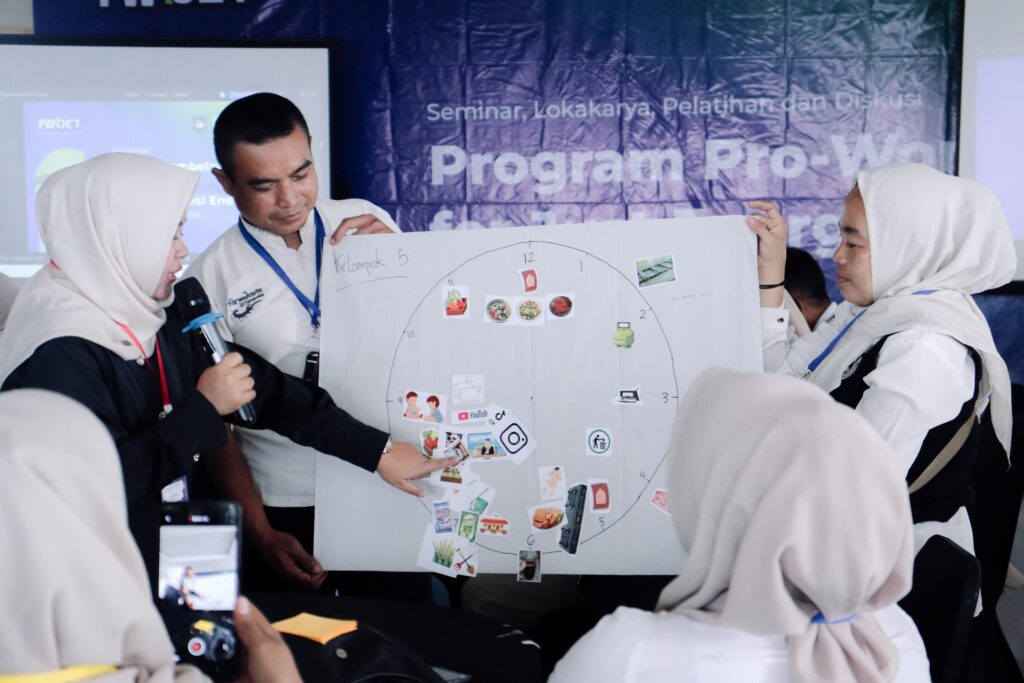
These findings provided an important reflection on women’s double burden, particularly when domestic work is not yet fully recognized as a shared responsibility within the household.
Through simulations of community meetings and household financial management, participants also discussed the importance of creating more equal spaces for women to express their opinions, as well as building communication and trust in household decision-making. The discussion then expanded to climate change and the energy transition. Participants identified various changes they had experienced, including rising temperatures, drought, fires, and water crises. However, these impacts were not experienced equally by all groups.
Women tended to experience increased domestic burdens, particularly when access to water and energy became more difficult, along with rising household expenditures. Men, on the other hand, often experienced impacts in the form of declining incomes, particularly from agriculture and natural resource-based livelihoods.
Participants then discussed various forms of intervention that could be supported through corporate social responsibility programs, including access to capital, technical training, and the provision of renewable energy technologies. Most groups considered technical training to be an intervention that could provide more equitable benefits for women, men, and younger generations.
The discussion reaffirmed that the energy transition needs to be designed not only around the technologies available, but also by considering who has access, who benefits, and who may be at risk of being left behind.
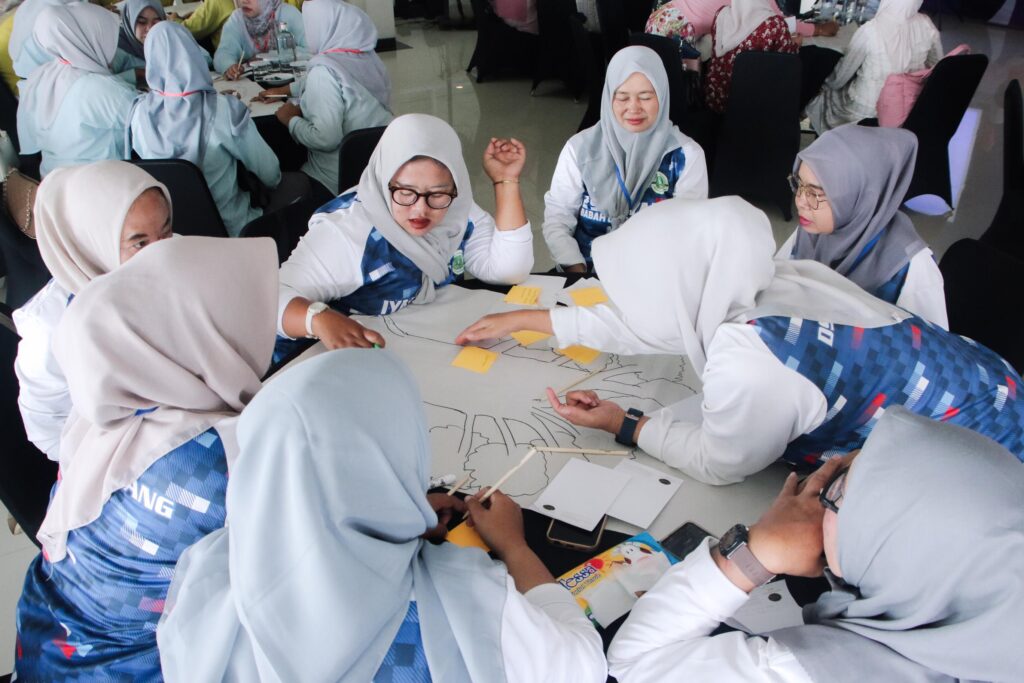
On the second day, participants continued the reflection process through the Action Tree session. Each village mapped the root causes of key challenges, solutions that could be pursued by the community, and the stakeholders who needed to be involved in addressing them.
In Tegal Datar Village, the main issues identified were drought and limited access to clean water. The community proposed strengthening clean water infrastructure while creating opportunities for dialogue with relevant stakeholders on the development of solar power systems.
Meanwhile, Sinargalih Village highlighted rising electricity costs and limited access to business capital, particularly for women-headed households and PEKA groups. Proposed solutions included the utilization of biogas and solar energy, along with access to financial support. The village government expressed its readiness to support land provision and involve community cadres in the village deliberation process.
In Citamiang Village, participants identified interconnected challenges related to global warming, health, the economy, waste, and water hyacinth. Proposed solutions included improving access to water and healthcare services, as well as managing waste and water hyacinth through collaboration with the village government, relevant government agencies, and YRE.
Pasir Jambu Village, meanwhile, highlighted household economic challenges, school dropouts, high electricity costs, limited street lighting, and early marriage. Participants proposed economic empowerment training, improved access to education, and better public lighting. The discussion also raised online gambling as one of the factors contributing to worsening household economic conditions and hindering the productive use of economic assistance.
The workshop concluded with the development of individual action plans tailored to different participant groups, including village government representatives, women, and men. Participants also completed follow-up and evaluation forms as part of the planning process for future activities.
Over the course of two days, the workshop became more than a space to understand the concept of GEDSI. It also opened conversations about the realities of everyday life in Maniis District. The discussions demonstrated that issues related to energy, climate change, the economy, water, education, and gender inequality are deeply interconnected.
Through PROWOMEN for JET, this process marks an initial step toward ensuring that the energy transition not only delivers cleaner energy sources, but also creates broader opportunities for women and vulnerable groups to participate.
Because a just energy transition can only be achieved when communities are not merely recipients of benefits, but also have an equal voice, role, and opportunity to shape the future of energy in their own communities.
Written by: Kharisanty Soufi
Edited by: Fauzan Ramadhan