When Volunteers and the Community Work Together to Build Water Resilience in Wanakerta
Access to clean water is not only about infrastructure. Sustaining that access also requires community participation, cross-sector collaboration, and collective action to ensure that solutions respond to local needs.
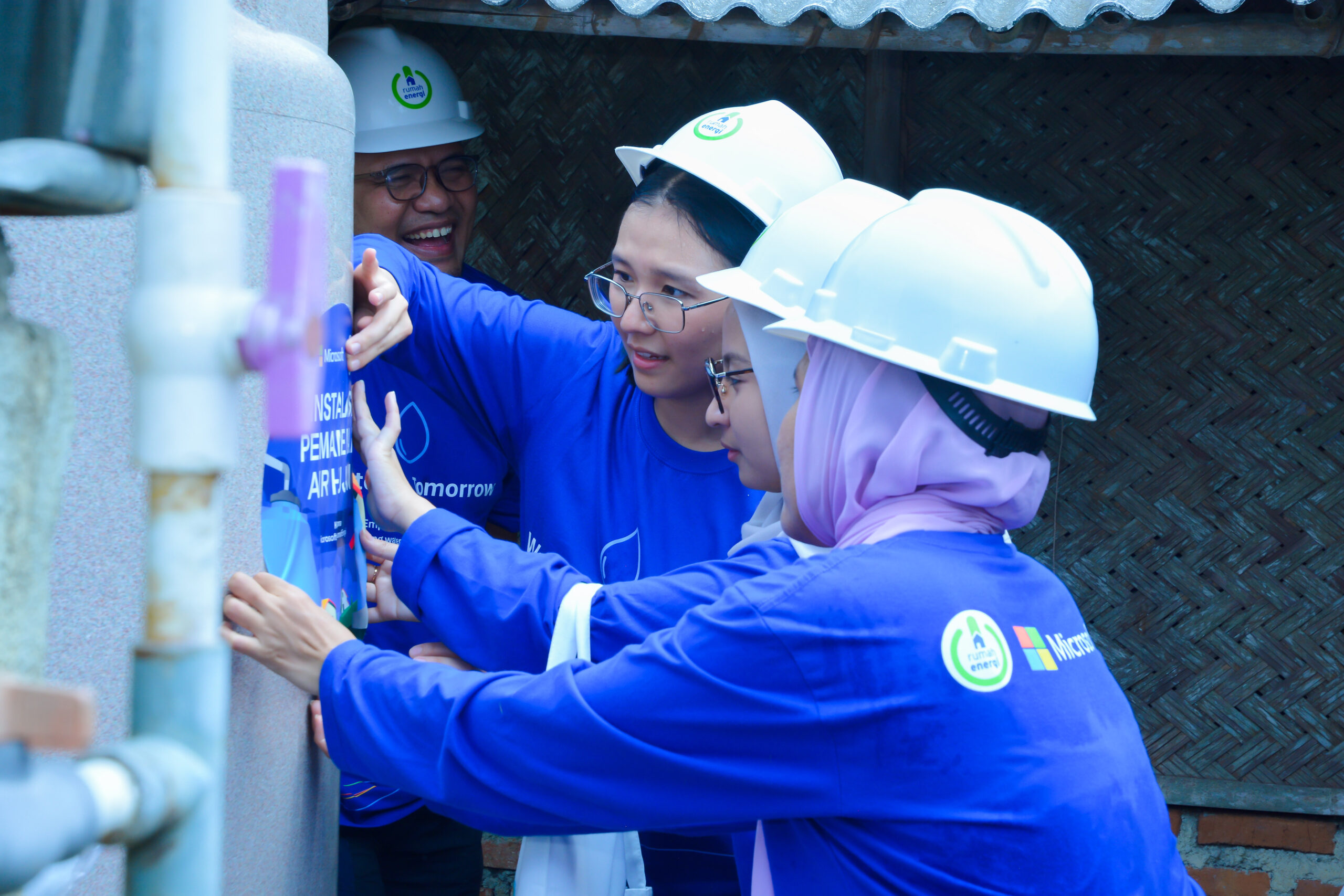
On 24 September 2026, Rumah Energi, with support from Microsoft, brought together government representatives, local communities, trained workers, and Microsoft volunteers for a community-based water conservation activity in Wanakerta, Telukjambe Barat, Karawang.
The activity was part of “Community-Based Water Conservation for Improved Access to Clean and Safe Water in Bekasi-Karawang,” including the construction of Rainwater Harvesting Systems (IPAH) together with local communities.
From infrastructure development to collective action
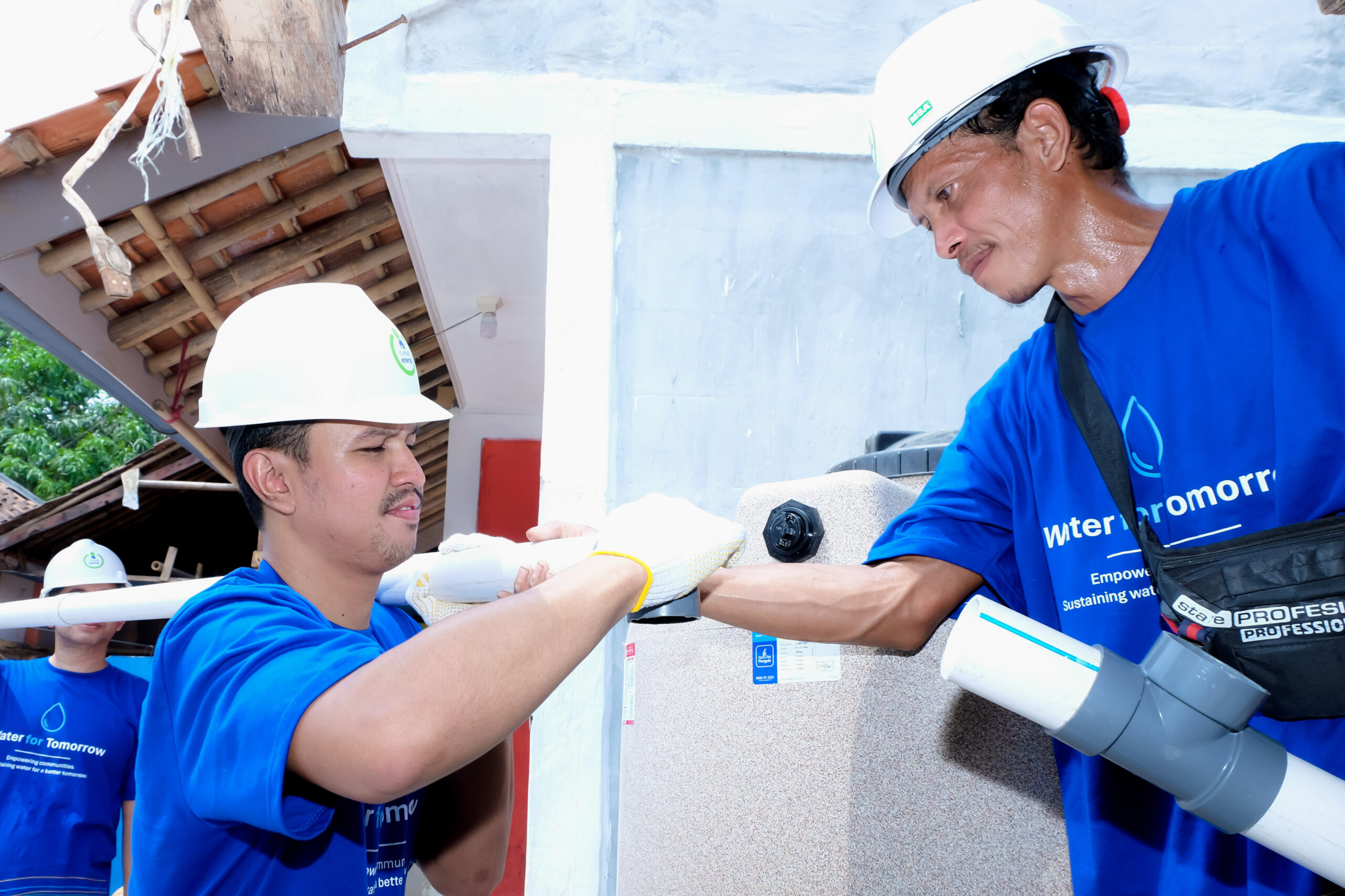
The construction of the rainwater harvesting system was more than an effort to provide a facility for collecting rainwater. It also created an opportunity for community members to take part in developing a solution that responds directly to their water needs.
During the activity, Microsoft volunteers worked alongside trained local workers and residents in the construction process. Despite the heat, volunteers actively participated in installing rainwater harvesting systems at residents’ homes.
Their involvement went beyond providing additional hands. Bringing volunteers, local workers, and community members together created opportunities for meaningful interaction, shared learning, and stronger connections between the private sector and local communities.
Communities as part of the solution
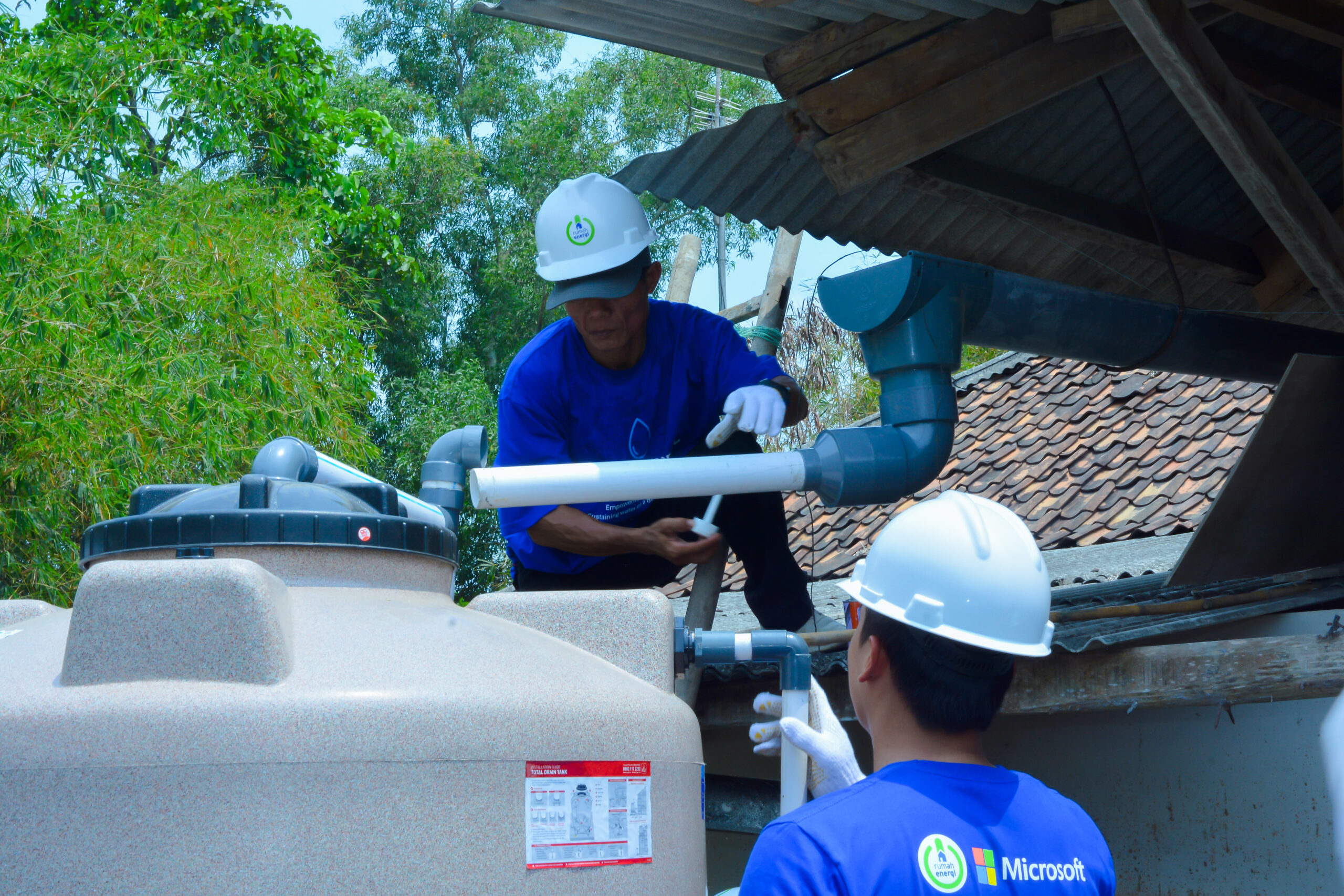
A community-based approach matters because water resilience cannot be built through physical infrastructure alone. Infrastructure becomes more meaningful when communities are involved in the process, understand how the system works, and have the capacity to maintain and sustain it over time.
Through the involvement of trained local workers, community members are not simply recipients of infrastructure, but active participants in developing solutions. At the same time, corporate volunteering creates additional opportunities for the private sector to contribute directly to community development.
This approach demonstrates how water conservation can bring together different resources—including technical expertise, local skills, private-sector support, and community participation—to address real needs at the grassroots level.
Strengthening resilience from the community level
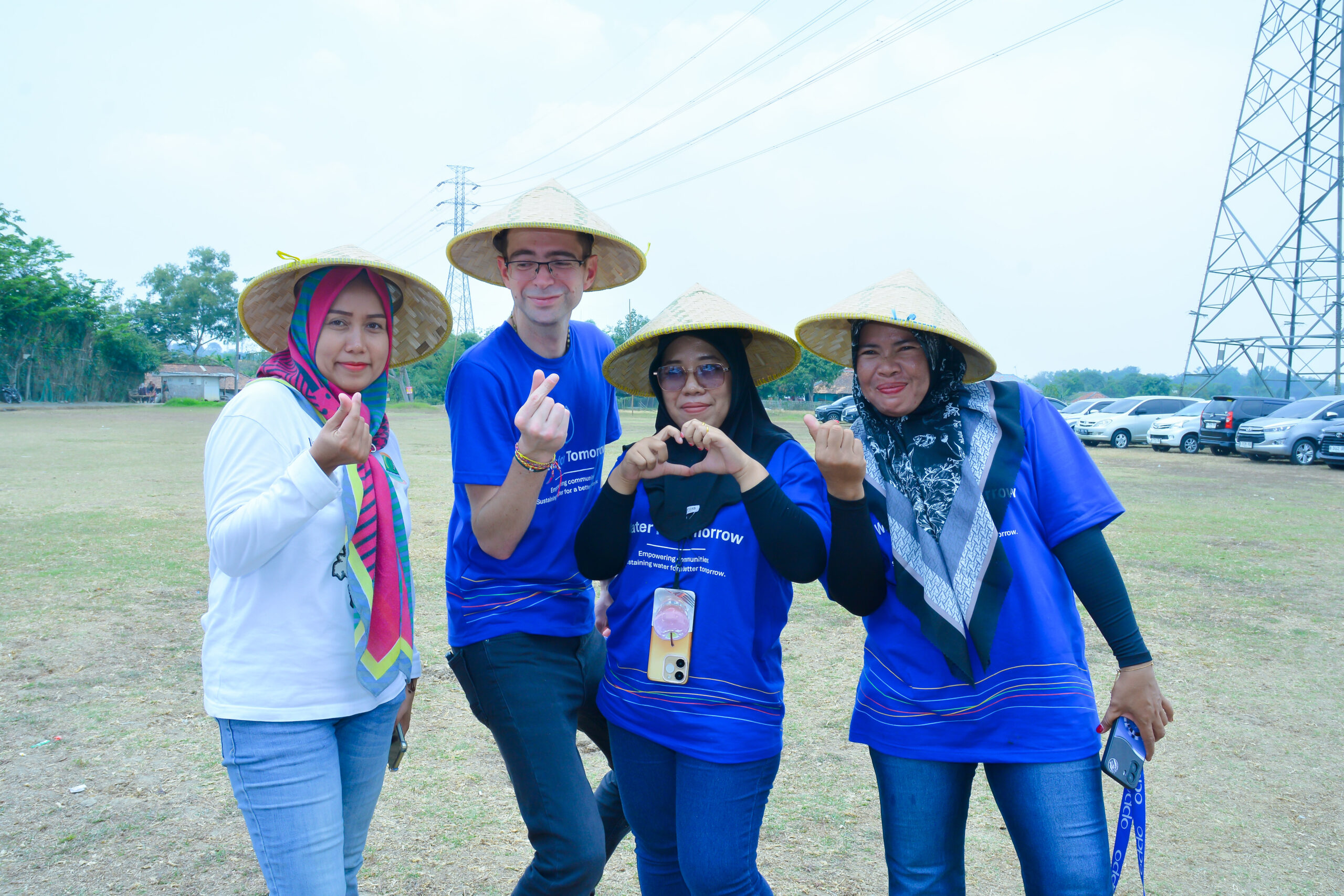
For Rumah Energi, strengthening access to clean water is part of a broader effort to build communities that are more resilient to environmental challenges and climate change.
Cross-sector collaboration is therefore an important part of the process. When governments, communities, local workers, the private sector, and volunteers contribute through their respective capacities, the impact can go beyond the construction of a single installation. It can become part of a collective effort to strengthen community resilience.
By bringing together technical expertise, community participation, and volunteer engagement, Rumah Energi continues to promote community-based solutions that respond to local needs and can be sustained over the long term.
Empowering communities. Sustaining water for a better tomorrow.