

Emergency Response to El Niño-Induced Drought: Insights from an Interview with Bekasi Regency’s Disaster Management Agency (BPBD)
Bekasi Regency faces recurring hydrometeorological disasters every year, ranging from floods during the rainy season to droughts during the dry season. In 2026, drought affected several areas, increasing the need for reliable access to clean water.
In the southern part of the regency, drought affected Cibarusak, Bojongmangu, Serangbaru, South Cikarang, and parts of Central Cikarang. Meanwhile, northern areas faced seawater intrusion, which caused community water sources to become saline and unsuitable for daily use.
In an interview, Mr. Dodi, Head of Emergency and Logistics at the Bekasi Regency Disaster Management Agency (BPBD), explained that limited operational capacity remained a major challenge in reaching all affected communities. With eight vehicles and 30 personnel, BPBD required support from various stakeholders to distribute assistance across 14 subdistricts and 47 villages.
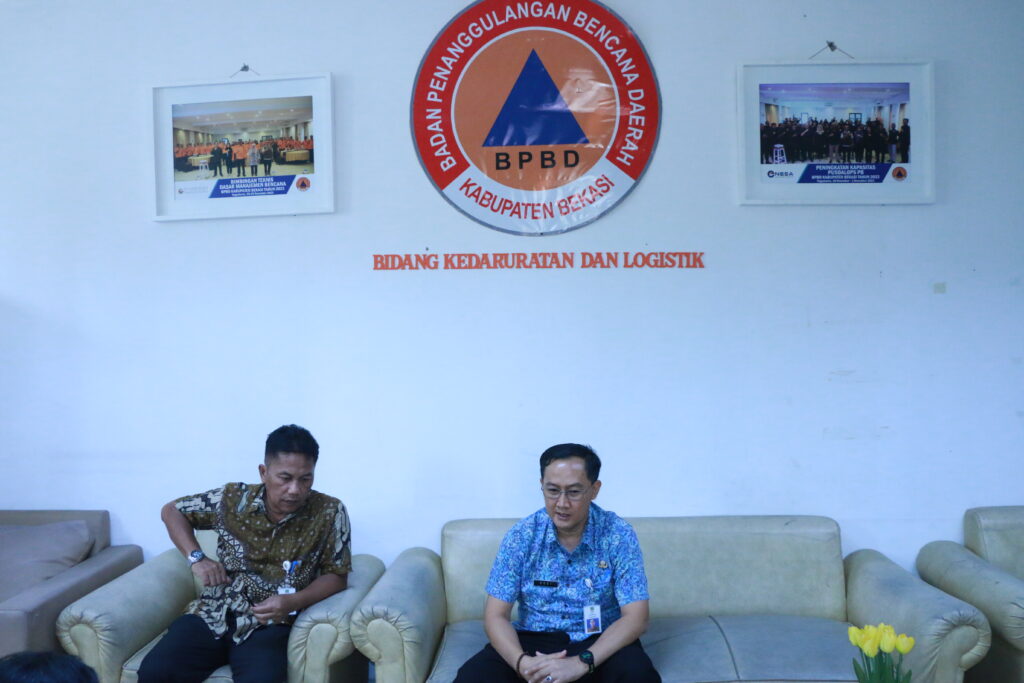
“Since the Logistics Cluster was established in 2023, we consider the drought response in 2026 to be the most effective and active so far. Cluster members have become more familiar with one another, enabling them to coordinate and initiate assistance independently when disasters occur,” Dodi said.
Collaboration to Expand the Reach of Emergency Assistance
To address these operational constraints, BPBD Bekasi Regency has strengthened coordination through the Logistics Cluster, which brings together government agencies, businesses, and humanitarian organizations, including Rumah Energi.
Since its establishment in 2023, the cluster has played an increasingly important role in strengthening coordination and joint disaster response. In 2026, collaboration became more effective as members took greater initiative in identifying community needs and delivering assistance without always waiting for formal requests.
Communities requiring clean water can report their needs directly to BPBD or through village and subdistrict administrations. Each report is then verified to assess local conditions, identify community needs, and determine the appropriate response.
Water Storage Tanks Accelerate Clean Water Distribution
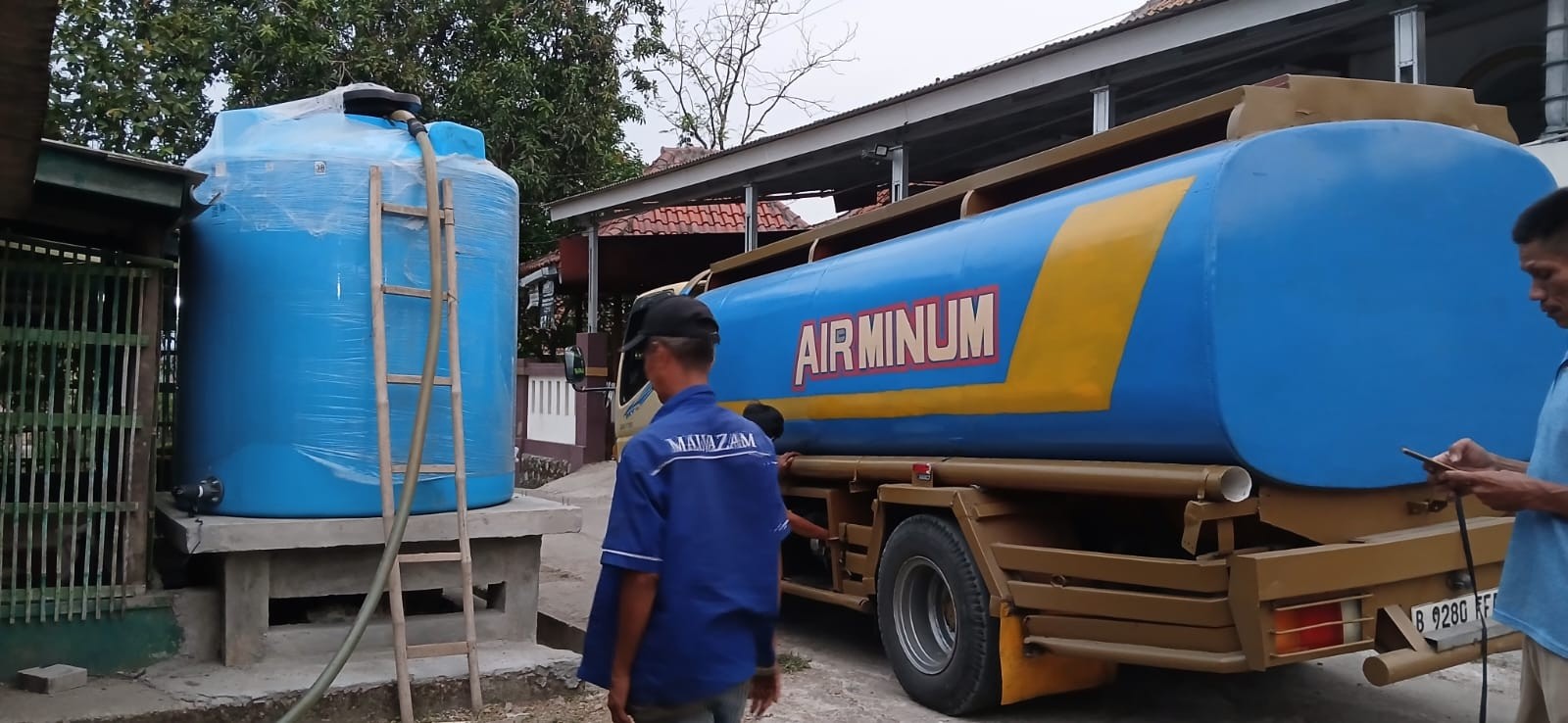
As part of the drought response, Microsoft and Rumah Energi supported the installation of 12 water storage tanks, each with a capacity of 5,000 liters, at 12 locations across Pasirranji, Cicau, Sukabungah, Serang, and Sukadami villages. These tanks and water collection facilities have helped accelerate clean water distribution to affected communities.
Previously, distributing a 5,000-liter water tanker could take approximately two to three hours, as residents collected water using jerry cans and buckets in turns.
With storage tanks and collection facilities in place, residents can access water more easily. BPBD has also supported several villages in constructing temporary water storage ponds using tarpaulins. These improvements have enabled each distribution vehicle to make two to three deliveries per day, delivering a total of 10,000–15,000 liters of water daily.
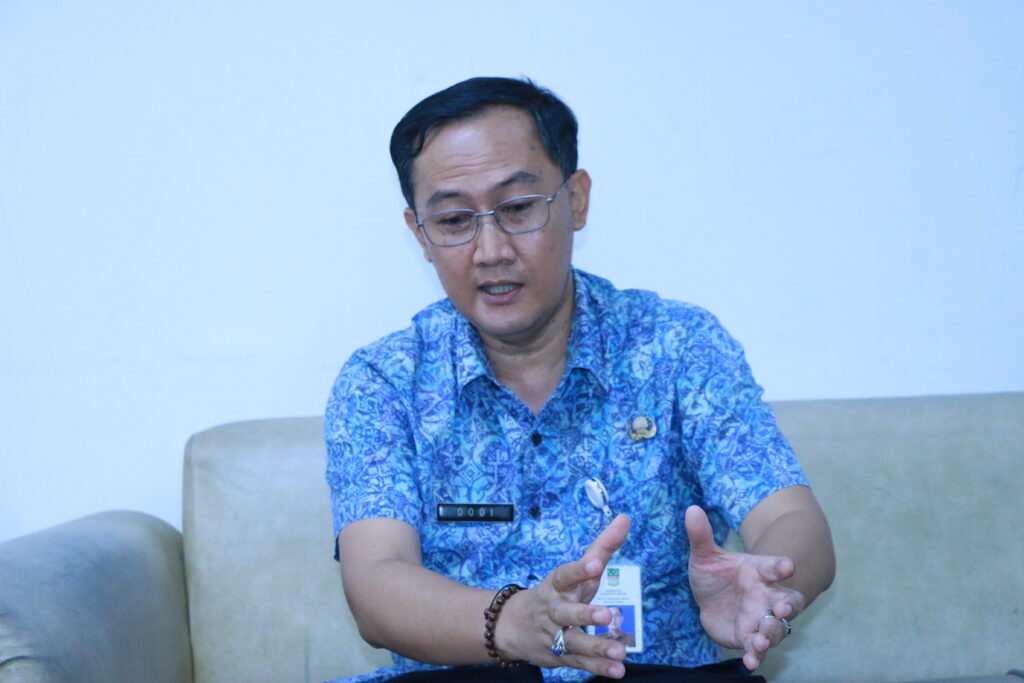
“With water tanks and collection facilities available, residents can simply collect water from designated locations. As a result, each water distribution vehicle can make two to three deliveries a day,” Dodi explained.
This experience demonstrates that drought response depends not only on the availability of water supplies but also on adequate storage infrastructure and efficient distribution systems. Collaboration among government agencies, the private sector, and humanitarian organizations has helped extend assistance to more affected communities.
Advancing Long-Term Solutions
BPBD Bekasi Regency continues to coordinate with provincial and national agencies to develop integrated solutions for managing floods and droughts, addressing challenges from upstream to downstream areas. One key priority is the development of retention ponds or reservoirs in upstream areas to capture rainwater during the wet season and provide water reserves during the dry season.
Beyond infrastructure, strengthening disaster reporting systems is also essential. BPBD hopes to see an integrated application that allows residents to report emergencies quickly while enabling officers to verify reports and respond to community needs more effectively.
At the community level, residents also play an important role in safeguarding water availability through responsible water use, leak prevention, rainwater harvesting, and tree planting.
The 2026 drought response in Bekasi Regency highlights the importance of cross-sector collaboration in strengthening disaster management. Water storage infrastructure offers a practical way to improve the efficiency of emergency assistance, while integrated water management and community preparedness are essential to building long-term water resilience.