

Microsoft and Rumah Energi Strengthen Emergency Drought Response in Karawang and Bekasi
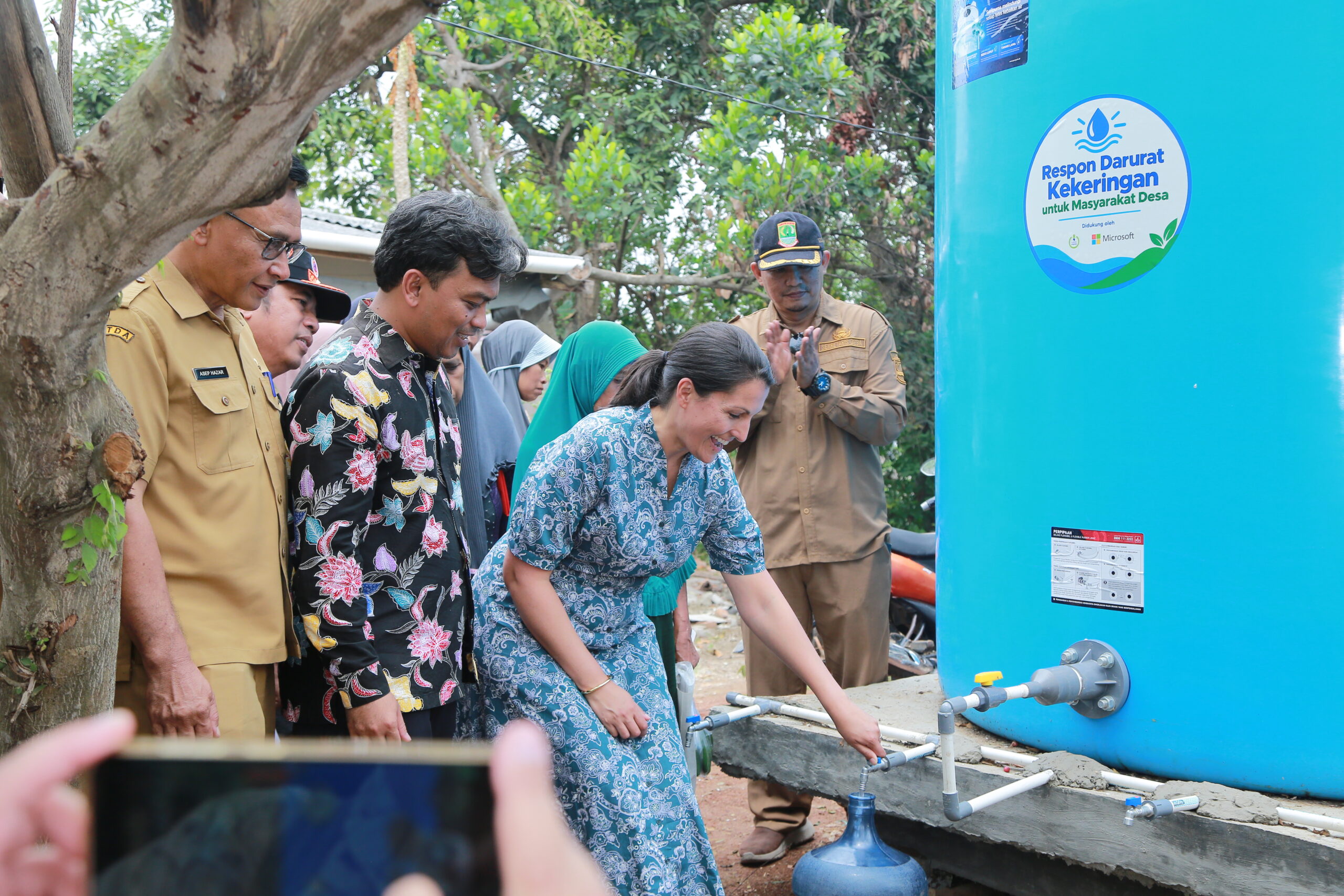
In response to the prolonged dry season, Microsoft and Rumah Energi are strengthening support for communities affected by drought in Karawang and Bekasi Regencies through the provision of water storage facilities and clean water distribution support. The initiative was marked by a series of handover ceremonies held in Sukaluyu Village, Karawang Regency, on October 27, 2026, and Cicau Village, Bekasi Regency, on October 29, 2026.
This initiative is part of the collaboration between Microsoft and Rumah Energi under the Community-based Water Conservation for Safe and Clean Water Access Enhancement in Bekasi-Karawang program, which aims to improve community access to clean water while strengthening water resilience through a community-based approach.
The prolonged dry season has placed increasing pressure on water availability in both regencies. For affected communities, limited water supplies create challenges not only in meeting drinking water needs but also in cooking, maintaining personal and environmental hygiene, and carrying out daily activities. In such circumstances, water storage facilities play an important role in supporting the distribution of assistance from the Regional Disaster Management Agency (BPBD) and other relevant institutions to communities in need.
Through this collaboration, the provision of water storage tanks is expected to make clean water more accessible to communities while strengthening village preparedness in responding to drought emergencies.
Cross-Sector Collaboration to Address Community Needs
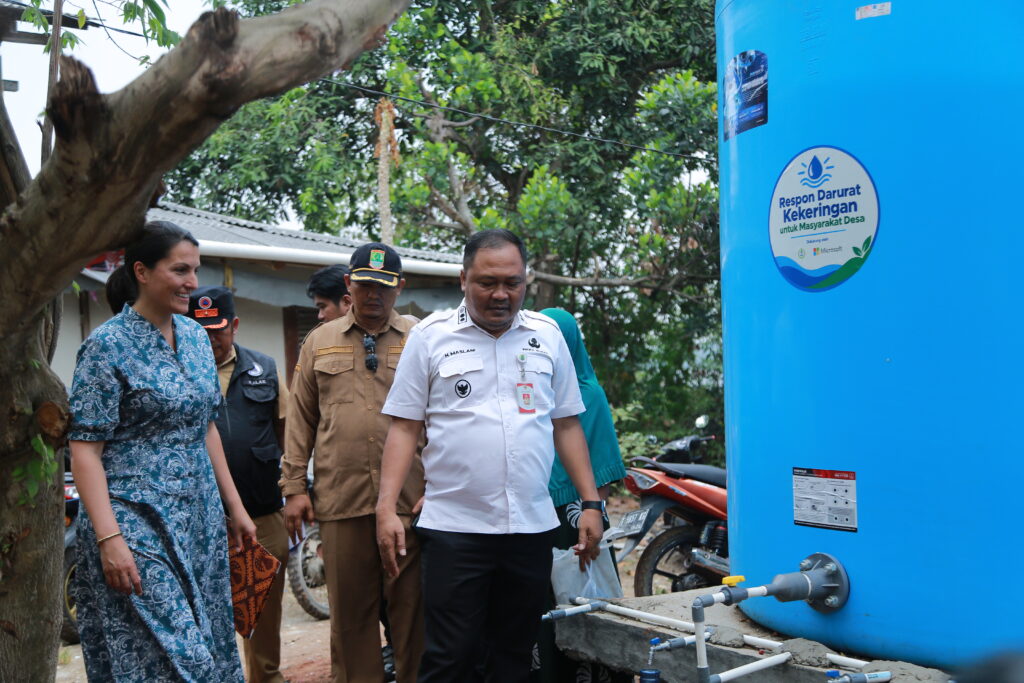
During the handover ceremony in Karawang, Vice Regent of Karawang H. Maslani expressed his appreciation to Microsoft and Rumah Energi for their contributions to addressing the impacts of drought in the region. He emphasized that meeting clean water needs requires a rapid, coordinated, and sustained response involving local governments, village administrations, BPBD, the private sector, civil society organizations, and local communities.
According to the information presented by the Karawang Regency Government, the first phase of assistance covered 16 water storage tank locations, supported by a total of 79,000 liters of water. The second phase is planned to include an additional 10 tank locations, with 1,040,000 liters of water distribution support. This brings the total water support presented in the remarks to 1,119,000 liters, with 26 tank locations planned overall.
These facilities are expected to improve water storage and distribution efficiency, including by supporting the delivery of assistance from BPBD and other relevant agencies.
Meanwhile, the activity in Cicau Village, Bekasi Regency, was part of similar efforts to strengthen support for communities facing limited access to clean water. Through coordination with local government, BPBD, village authorities, and community members, the placement of water storage facilities was designed to address local needs and ensure convenient access for residents.
This approach highlights the importance of local coordination in implementing emergency assistance. Local governments and BPBD play a role in emergency response and water distribution, village administrations facilitate coordination at the community level, while Rumah Energi and Microsoft support the provision of facilities and the implementation of the initiative on the ground.
Rumah Energi Encourages Sustainable Use and Maintenance of Water Facilities
Rumah Energi Executive Director Sumanda Tondang emphasized that collaboration among stakeholders is key to delivering solutions for communities facing limited access to clean water.
According to Rumah Energi’s approach, providing water storage facilities must go hand in hand with the active involvement of stakeholders, from planning and coordination to the utilization and maintenance of the facilities. This ensures that the assistance not only addresses immediate needs but also delivers longer-term benefits.
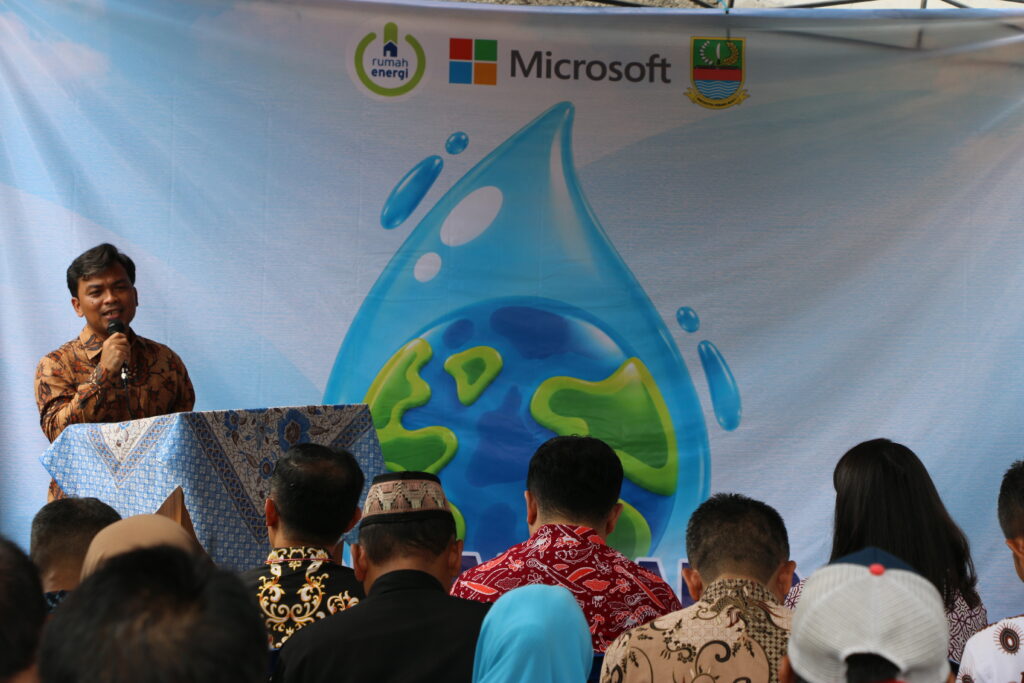
“We hope that communities will make good use of, protect, and maintain the water storage tanks provided. Community involvement is essential to ensuring that these facilities remain functional and can be shared and used according to local needs,” said Sumanda.
Coordination among village administrations, community-level facility managers, BPBD, and other relevant stakeholders must also be maintained. Proper management will help ensure that the water storage facilities are used optimally, particularly when emergency water distribution is needed again during the dry season.
This collaboration also demonstrates that communities are not merely recipients of assistance, but active participants in maintaining the sustainability of the solutions provided.
Assistance That Addresses Everyday Community Needs
For communities living in drought-affected areas, access to clean water is directly linked to the continuity of their daily household activities. When water sources experience declining levels or become difficult to access, residents must seek alternative supplies to meet their daily needs. This situation can increase the time, effort, and financial burden on households.
The availability of water storage tanks is expected to help reduce these challenges, particularly when clean water is distributed by BPBD and other relevant agencies. With storage facilities located within their villages, residents can collect and access distributed water according to their needs.
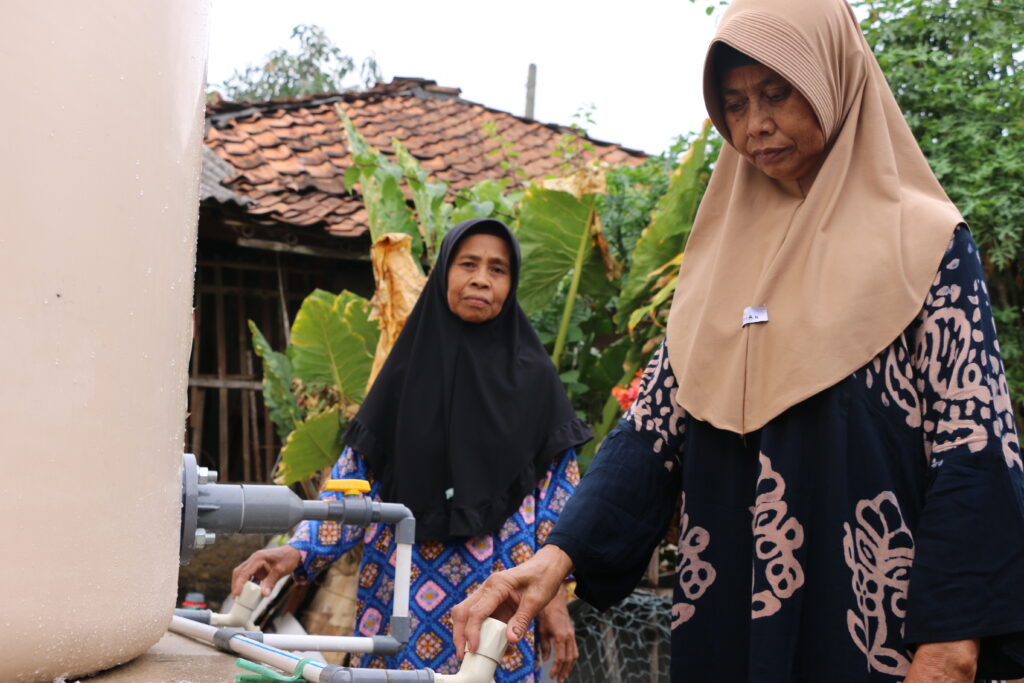
“During the dry season, water is really hard to find. Sometimes we don’t know where to get enough water for our daily needs. Thankfully, we now have these water tanks. Hopefully, when water assistance arrives, it will be easier for us to store it, and we won’t have to struggle as much,” said Warsih, a beneficiary representative from Cicau.
Community perspectives are an important part of the initiative’s success. The impact of assistance is determined not only by the availability of facilities but also by how effectively they address residents’ needs and how well they are collectively managed and maintained over time.
From Emergency Response to Long-Term Water Resilience
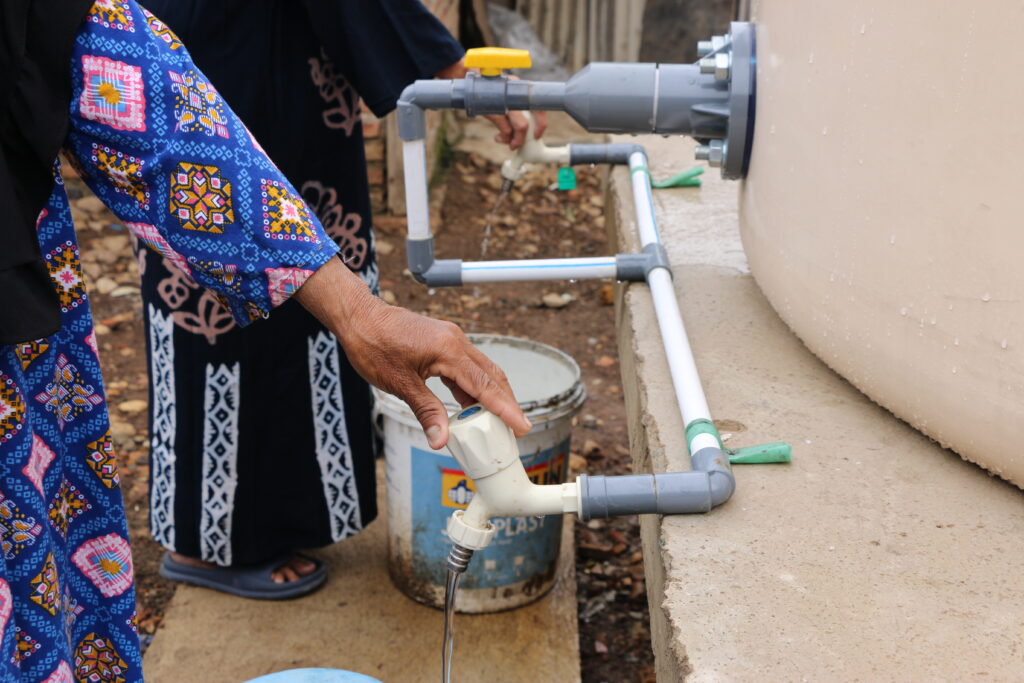
Providing water storage facilities and supporting clean water distribution are important steps in addressing urgent needs during droughts. However, strengthening long-term water resilience requires a more comprehensive approach, including water conservation, rainwater harvesting, water source protection, community education, and improved preparedness for climate change.
In line with the objectives of the community-based water conservation program, Microsoft and Rumah Energi also promote solutions that help communities manage water resources more effectively. One such solution is the installation of Rainwater Harvesting Systems (IPAH), which enable rainwater to be collected and stored as an alternative water source when water availability becomes increasingly limited.
Previously, the collaboration between Microsoft and Rumah Energi had supported the development of rainwater harvesting systems in several villages across Bekasi and Karawang Regencies. These efforts complement emergency response measures through the provision of water storage facilities, reflecting an approach that addresses not only immediate needs but also strengthens community resilience in the long term.