Bekasi – Over the past two decades, Cicau Village in Central Cikarang, Bekasi Regency, has undergone rapid transformation. The expansion of industrial areas has brought population growth and economic opportunities, but it has also created a growing challenge: increasing volumes of waste with increasingly complex characteristics.
While household waste in the past was largely organic, generated from agricultural activities, today it is dominated by plastic packaging, industrial waste, and disposable diapers. With limited waste management facilities available, many residents still rely on open burning to reduce waste. This practice has affected not only the quality of the environment but also public health.
In response to these challenges, Rumah Energi together with Microsoft organized a Community-Based Waste Management Training on June 25 and July 22, 2026. The program went beyond teaching residents how to sort waste—it encouraged participants to rethink their relationship with waste and recognize that meaningful change begins with a shift in mindset.
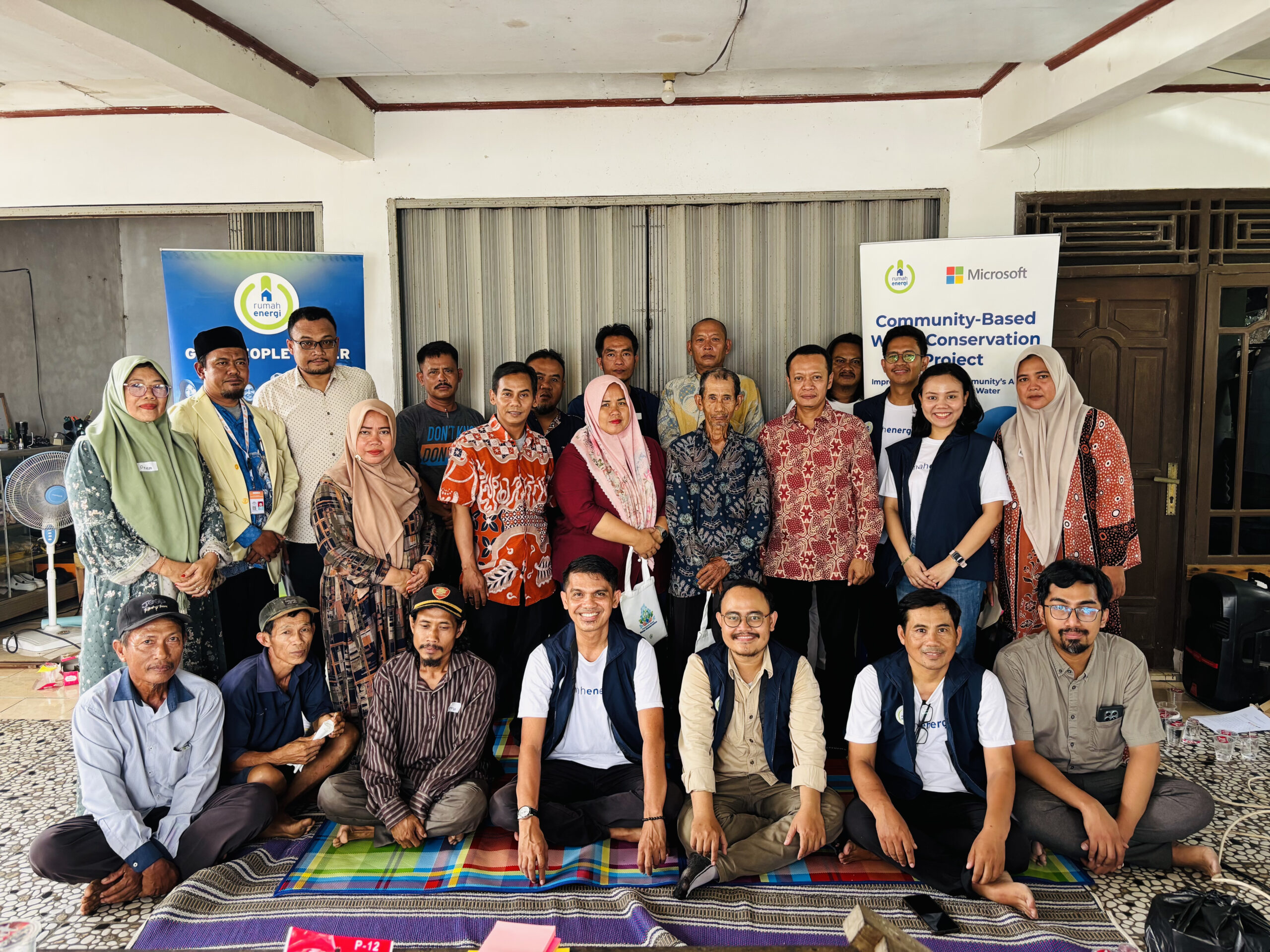
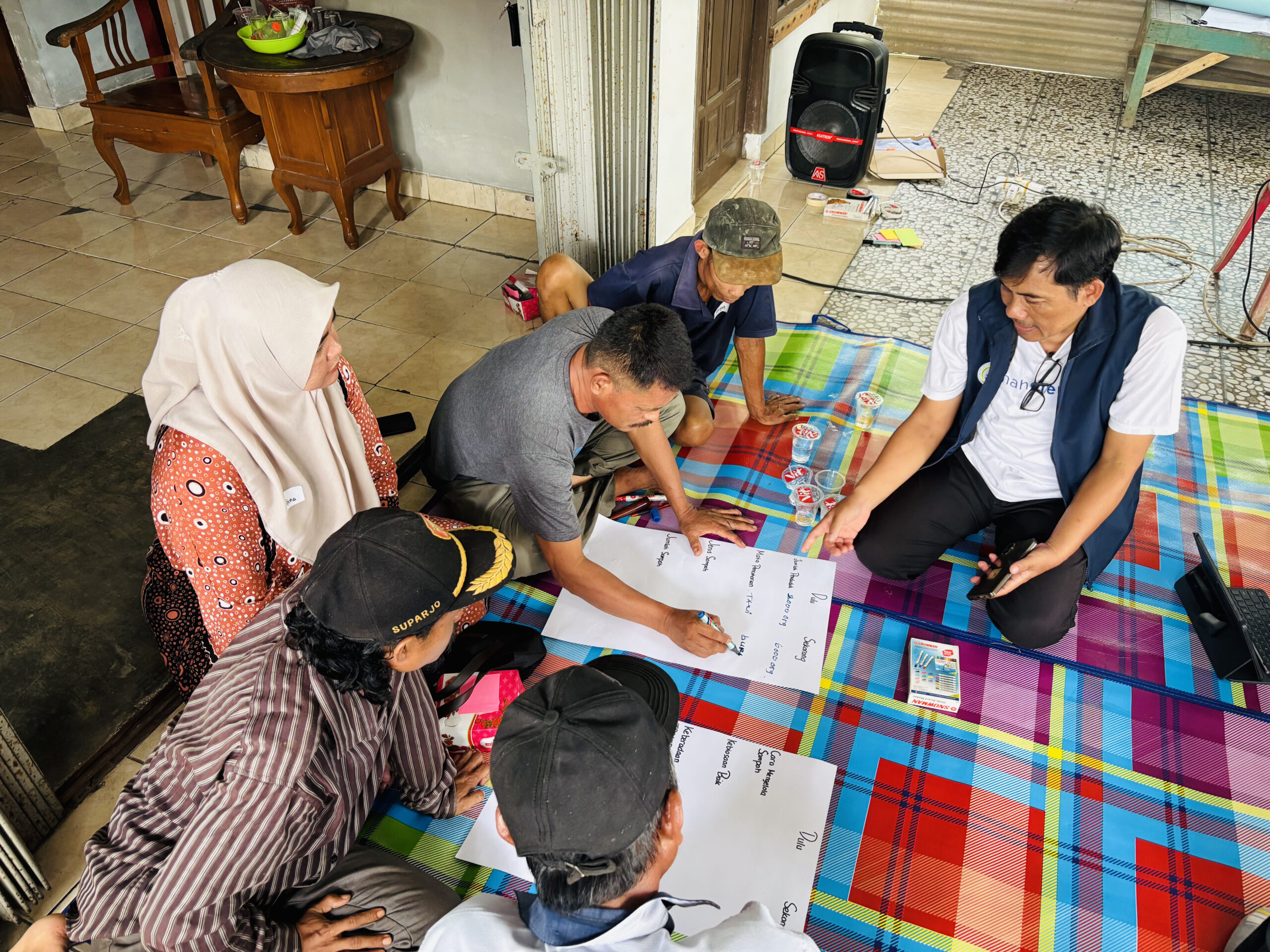
Using the Capability, Opportunity, Motivation, and Behavior (COM-B) approach, participants reflected on the impacts of waste in their daily lives, identified the strengths within their communities, and developed action plans based on their own needs and local realities. Rather than introducing externally designed solutions, the training empowered the community to create solutions rooted in their own awareness and collective commitment.
Throughout the discussions, residents identified key challenges to improving waste management, including limited land for establishing waste banks, low public participation in waste sorting, and the need for stronger support from village authorities and other stakeholders to strengthen community-based waste management systems.
Despite these obstacles, one shared aspiration emerged clearly: creating a cleaner, healthier, and more livable environment.
For Ali (Komeng), one of the participants, waste is no longer something to be discarded without thought.
“For me, waste is not a problem or the end of everything. Waste is something valuable.”
He has already been turning organic waste into compost for his home garden. This simple practice demonstrates that waste can have value when it is managed and processed appropriately.
A similar spirit was expressed by Itoh M., a local Posyandu (Integrated Health Service Post) volunteer. She believes that real change can only happen through concrete action. Together with other community health volunteers, she is committed to educating residents and supporting the establishment of a community waste bank.
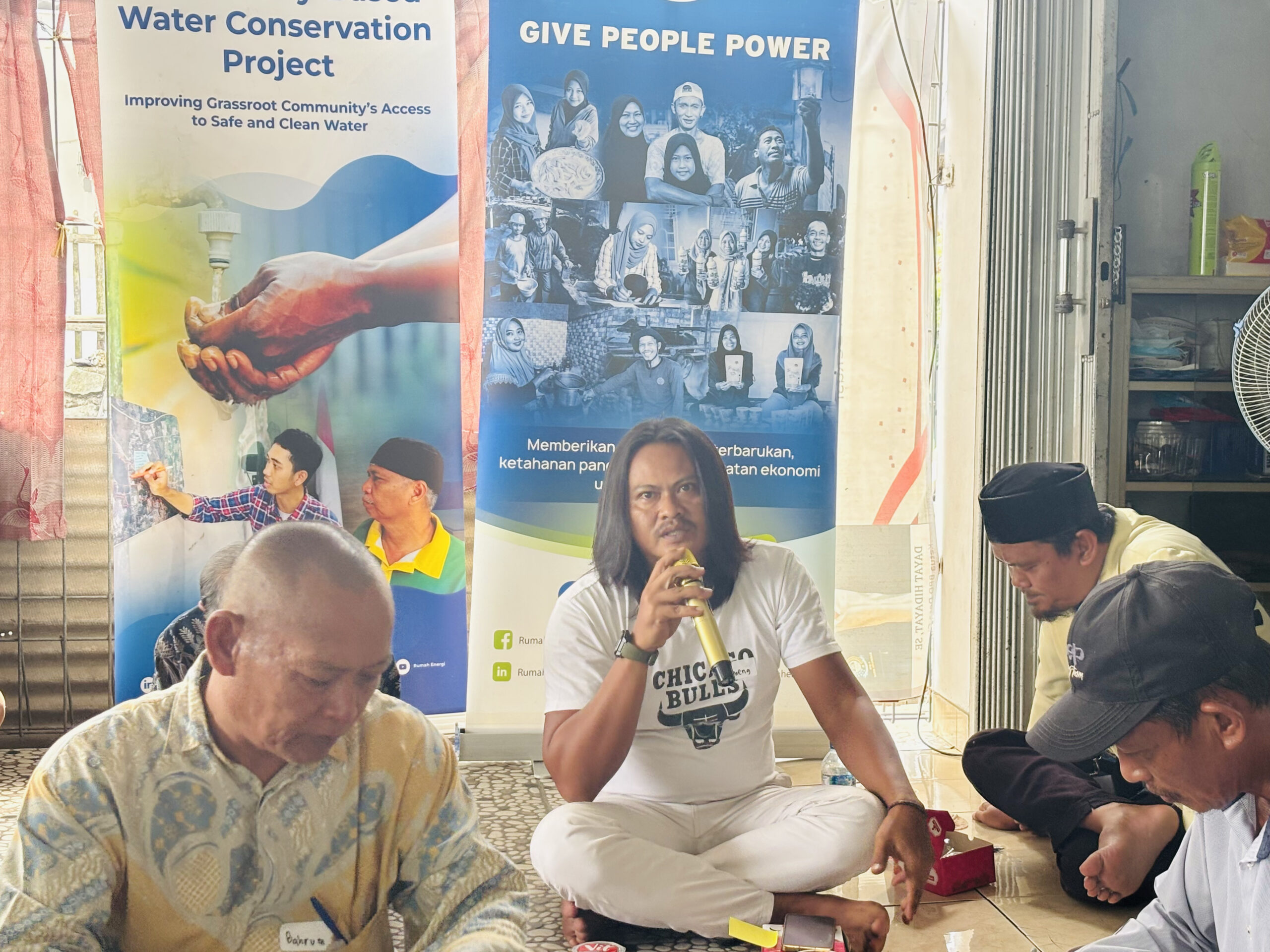
The training also introduced participants to practical waste management solutions, including composting, eco-enzyme production, biogas, Black Soldier Fly (BSF) maggot cultivation, and Community Waste Banks. Participants then worked together to identify the most realistic and achievable initiatives for their village.
The Community-Based Waste Management Training is part of Indonesia Berdaya, Rumah Energi’s initiative to strengthen community resilience by empowering local people to build healthier, more sustainable, and climate-resilient communities.
Waste management is about more than reducing waste. It is about fostering awareness, strengthening collective action, and creating lasting behavioral change driven by the community itself. Because when a community transforms the way it sees waste, it creates not only a cleaner environment, but also renewed hope for a more resilient and empowered future.