
Husband and Wife in Harmony, Nurturing Environmental Change
For Ibu Yulianti and her husband, environmental issues were not something they initially learned about from books or major forums. They saw them firsthand every day, right around their own home. Household waste was often disposed of carelessly, while livestock manure accumulated without proper management. Gradually, these conditions made their surroundings look dirty and less comfortable to live in.
As a young couple, they lived a simple life, much like many other families. They took care of their home, worked, and went about their daily activities. But as she continued to see the same environmental problems around her, a sense of concern began to grow within Ibu Yuli. She felt that the issue of waste could no longer be taken for granted.
After joining the PRO-WOMEN program, Ibu Yuli gained new knowledge about environmental management, particularly through the practice of processing organic waste using composting methods. Through this learning process, she began to understand that environmental issues are closely connected to women’s everyday lives.
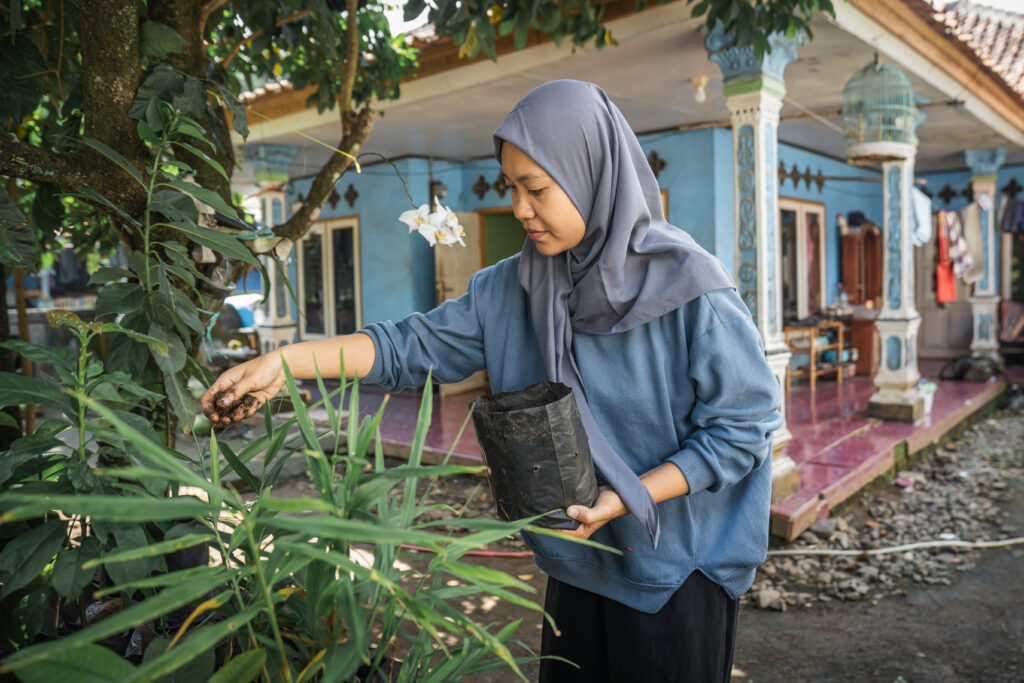
Women are often the ones who deal most frequently with household waste. They manage many of the household’s daily needs. And they are also among those who feel the greatest impact when the environment becomes unhealthy. This realization encouraged Ibu Yuli to try something simple at home. She began turning household waste and livestock manure into organic fertilizer. At first, it was simply a small experiment she carried out on her own. Waste that had previously been thrown away was separated, collected, and processed into compost for the plants she grew around her home, including tomatoes, chilies, guavas, and rambutans.
The process did not go perfectly from the beginning. There were stages of trial and error—trying, failing, and making improvements along the way. But gradually, the results began to show. Her plants grew healthier, while the use of chemical fertilizers was reduced and slowly replaced with organic fertilizer that she produced herself. What started as a small effort to address an issue in her own household gradually created a wider impact. Her neighbors began to notice the changes. They saw how well her plants were growing, how much cleaner her surroundings had become, and how organic waste was no longer simply left to accumulate. Curiosity emerged, and eventually turned into interest.
Today, several community members have begun following Ibu Yuli’s example. Household waste that was once immediately discarded is now being collected and used as material for composting.
This change has also created a new social space among the women in her community. Ibu Yuli does not only share the results of her work, but also shares her knowledge. She regularly organizes informal gatherings with community members, creating a simple learning space where they can discuss waste management and learn how to make organic fertilizer.
Through these gatherings, relationships among community members have grown stronger. There is space to talk, space to learn from one another, and a growing sense that they are working together to care for their own environment.
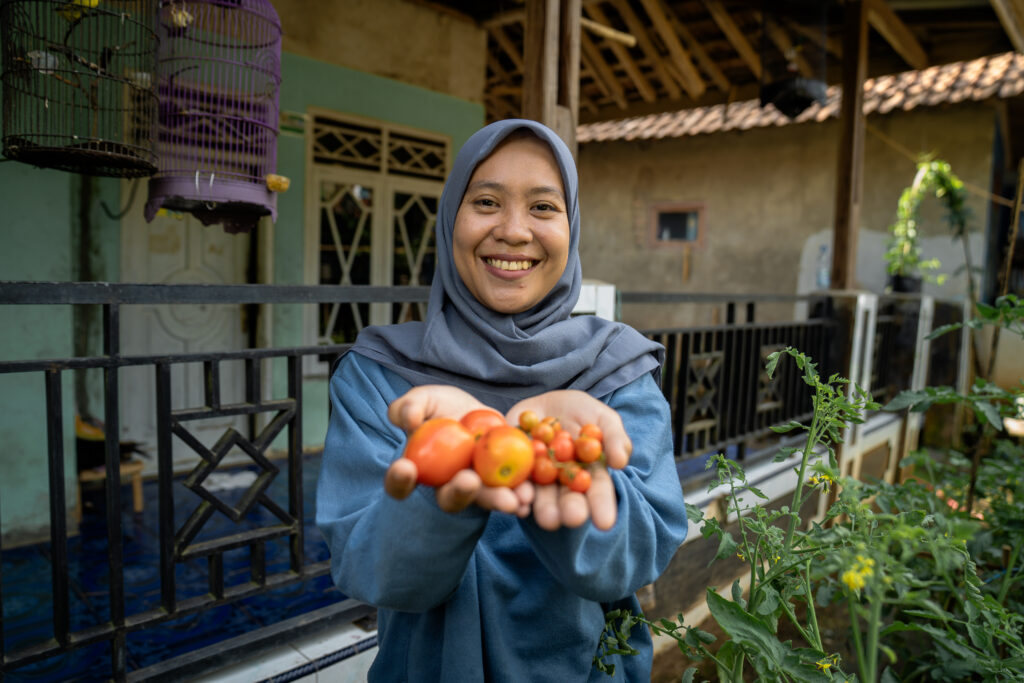
“I feel proud of myself because I can finally be useful to my neighbors, even in a simple way,”. said Ibu Yuli
Her words reflect an important change she has experienced within herself: women do not have to do something extraordinary to make an impact. Sometimes, change grows from small steps taken consistently.
The PRO-WOMEN program has also opened up new opportunities for Ibu Yuli in her social life. She has expanded her network and joined a small and medium-sized industry association. Through this community, she has found a supportive environment where women can encourage one another and feel that they do not have to walk this journey alone.
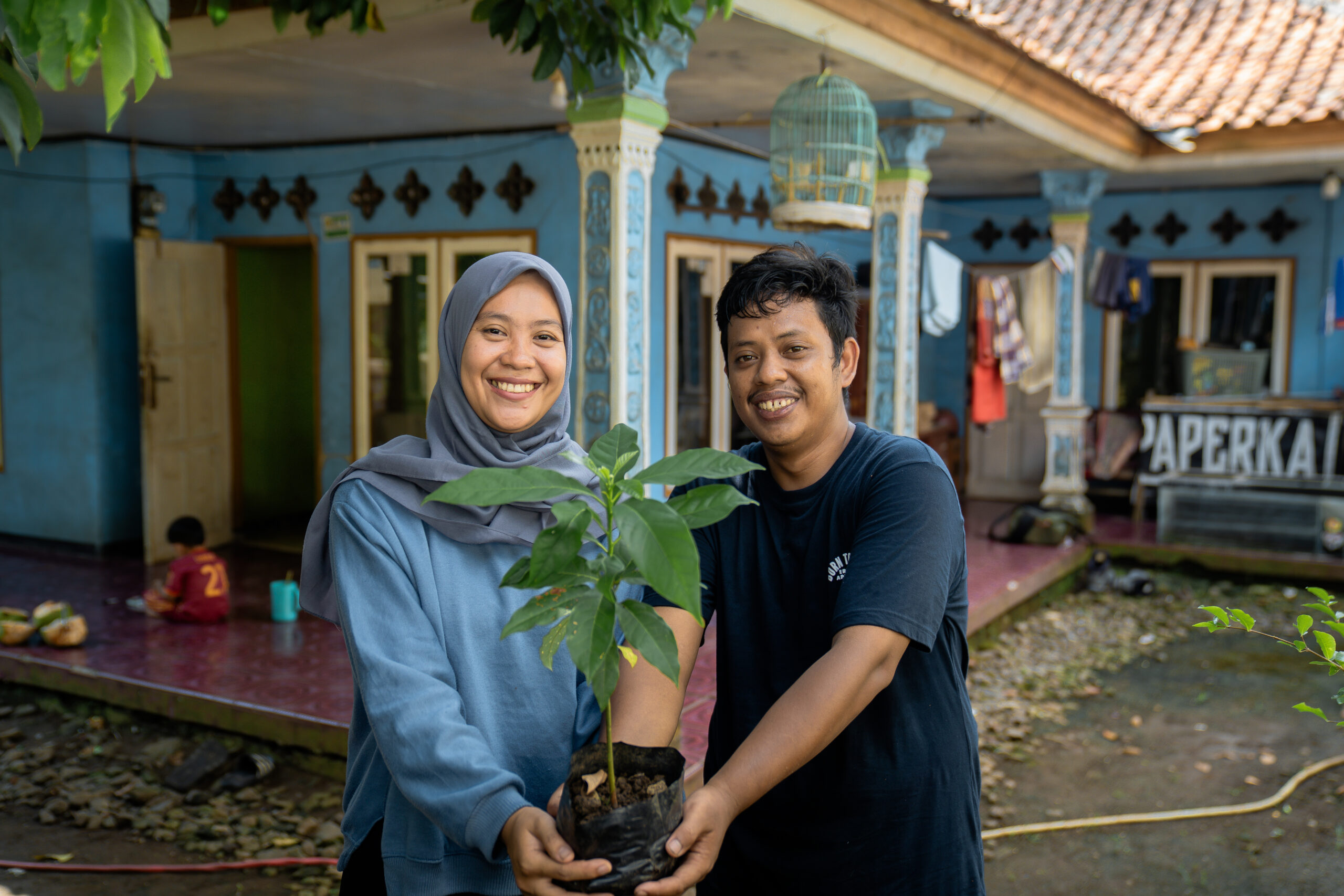
But perhaps the most meaningful change has also taken place within her own household. What began as a simple idea from Ibu Yuli gradually gained the support of her husband. Together, they began learning, discussing, and looking for solutions to the environmental challenges around them.
For her husband, this experience changed the way he viewed women’s roles within the household.
““It turns out that listening to your wife’s advice is not always a bad thing, because sometimes, when we reach a dead end, the solution comes from the person closest to us—our wife,”. he said.
The simple statement carries a deeper meaning. It is an acknowledgment that women are not merely partners in the household, but can also be a source of ideas, knowledge, and change.
At this point, the change is no longer simply about waste being managed or the environment becoming cleaner. It is also about a relationship becoming more equal. It is about creating greater space for dialogue. And it is about a couple learning to move forward together as they address the challenges in the community around them.
Today, the change continues to grow, slowly but steadily. From their modest home, new habits are beginning to take root in the surrounding community. Household waste that was once carelessly discarded is now being collected and turned into compost. Community members are beginning to see that something once considered useless can, in fact, become a source of value.
Written by: Ijai Pratama
Edited by: Fauzan Ramadhan