When Local Builders Become the Frontline of Community Water Resilience
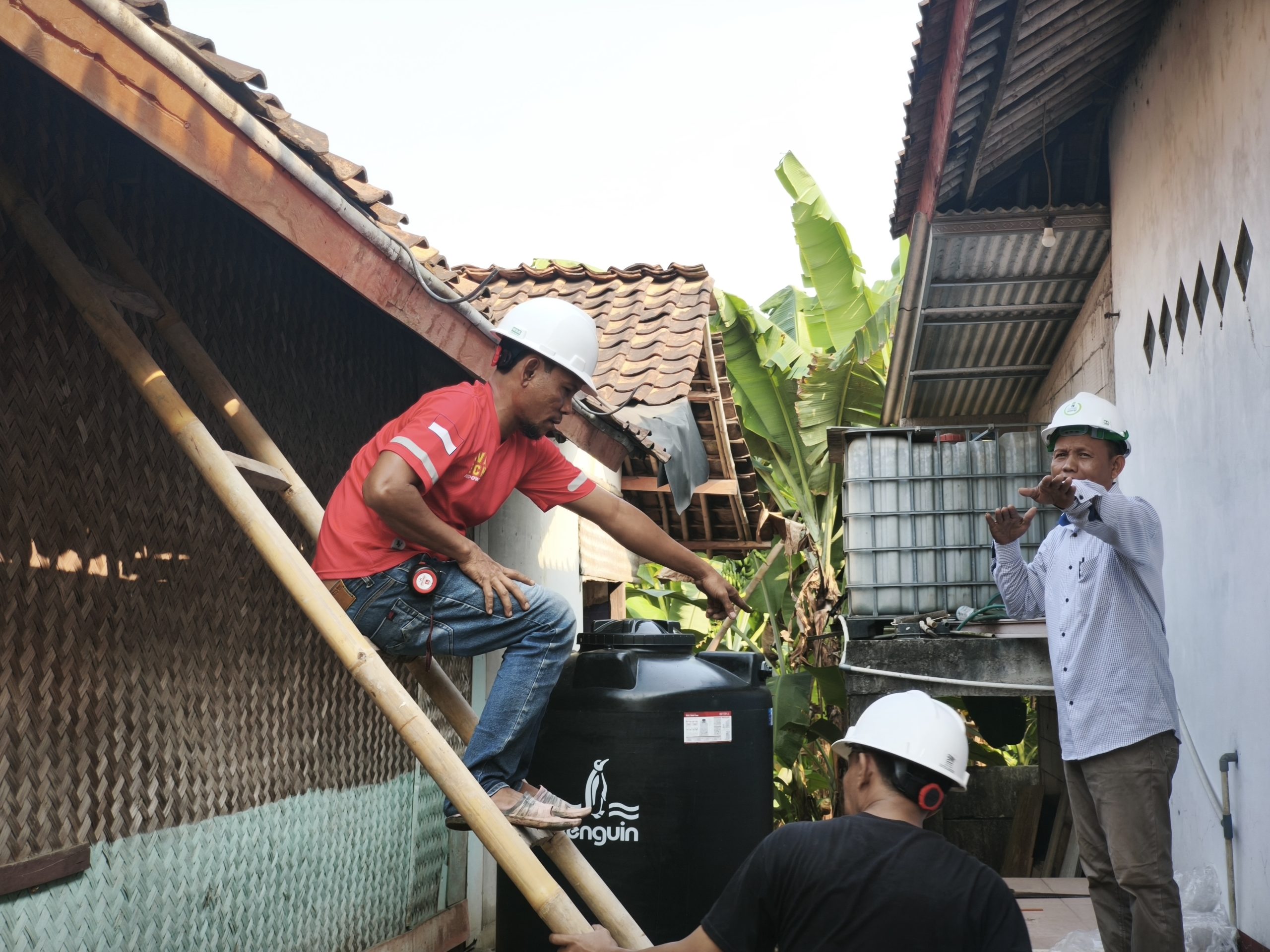
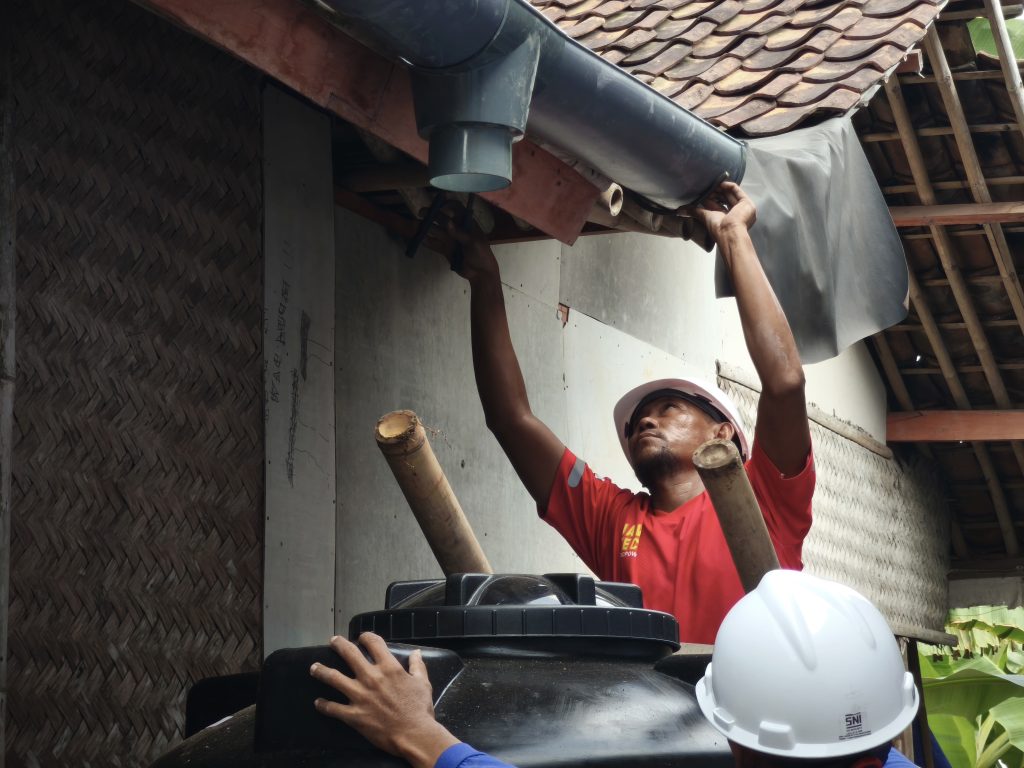
Access to clean water depends not only on the infrastructure that is built, but also on the people who are capable of maintaining and sustaining it over the long term. With this in mind, Rumah Energi, in collaboration with Microsoft, organized the Technical Guideline Training for Rainwater Harvesting (RWH) Construction, a technical training program for local builders from four partner villages. Held on June 27 and July 4, 11, and 18, 2026, the training took place in Wanajaya, Pasirranji, Wanakerta, and Cicau Villages, involving 16 local builders who had previously been identified based on their skills and potential within their respective communities.
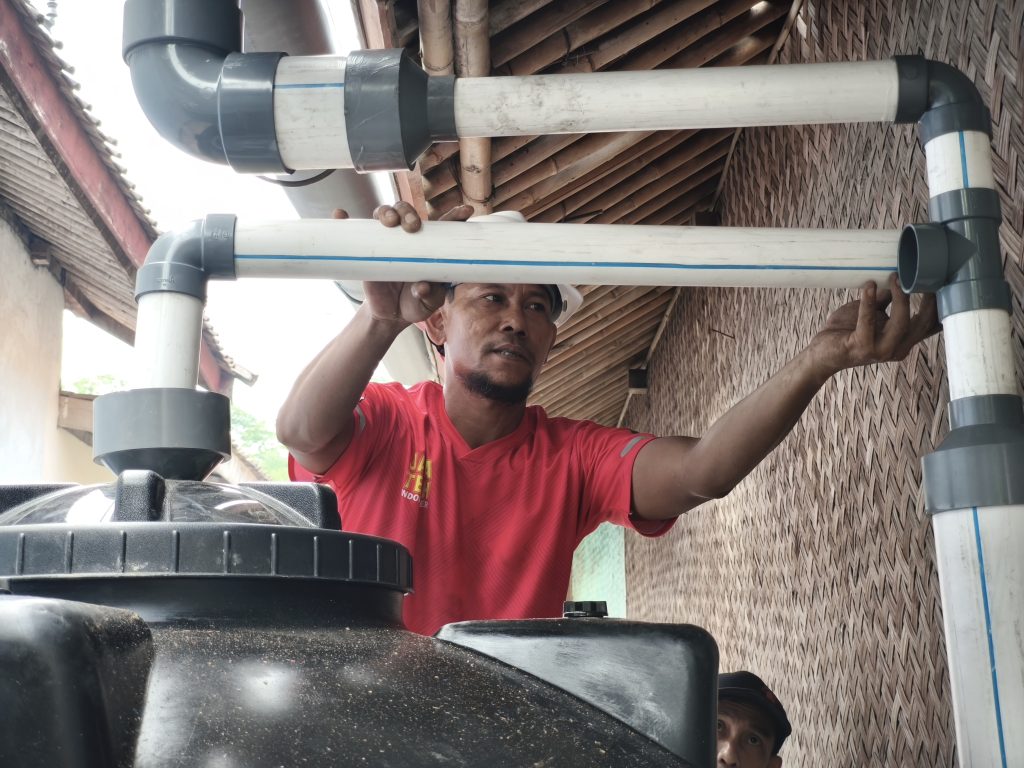
Throughout the training, participants were introduced not only to the fundamentals of rainwater harvesting but also to practical technical skills, including construction planning, material estimation, preparing a simple cost budget (RAB), and the hands-on installation of Rainwater Harvesting (RWH) systems. This approach ensures that technical knowledge extends beyond project implementation and becomes a lasting capacity within the community.
Practical Feedback from the Field
“After joining this training, I have a much clearer understanding of the RWH construction process. To make the work easier, the illustrations in the manual should match the actual water tanks and materials being used. However, every installation still needs to be adapted to the specific conditions of each house or site,”
— Rusman, Training Participant
His feedback reflects how the training served not only as a platform for knowledge transfer but also as a space for two-way learning, where practical field experience contributed to improving the technical training materials.
Sustainability and Inclusive Services for Vulnerable Households
In many development initiatives, infrastructure often receives the greatest attention. Yet, the long-term sustainability of any system ultimately depends on the community’s ability to operate, maintain, and repair it after the project is completed. Through this training, local builders are being prepared to become technical partners within their villages, capable of maintaining and repairing rainwater harvesting systems whenever needed.
Their role is especially important as many RWH beneficiaries are elderly residents or vulnerable households who may not be able to carry out major repairs independently. As a result, the presence of trained local builders helps make access to safe water services more inclusive and sustainable.
Strengthening Water Conservation and Local Economy
Beyond strengthening technical capacity, the training also contributes to community-based water conservation efforts. By equipping local residents with practical expertise, the benefits of the program extend well beyond a single infrastructure project, creating opportunities to replicate and expand rainwater harvesting systems in the future.
At the same time, these new skills can generate additional livelihood opportunities, enabling local builders to provide construction and maintenance services within their communities.
Implementing the Indonesia Berdaya Framework
This initiative forms part of Rumah Energi’s Indonesia Berdaya framework, which views development as more than simply delivering infrastructure. Instead, it focuses on strengthening local capacity so that communities become the primary drivers of sustainable change. When knowledge and technical skills are rooted within the community, people become more than beneficiaries—they become the owners, caretakers, and innovators of climate resilience solutions that can continue to grow and adapt to future challenges.